Trump's Claims of Foreign Election Interference Lack Substantial Evidence
Donald Trump has consistently invoked the concept of foreign election interference as a rationale for his actions, despite evidence that contradicts his claims. His statements have led to significant debate regarding the integrity of election security and the potential for political manipulation.
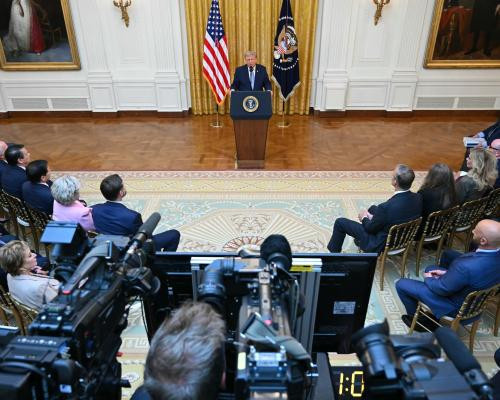
In a recent speech, Trump characterized the voting system as "so broken and so vulnerable that no one can possibly defend it." However, fact-checkers have determined that his claims are not substantiated by evidence. A 2021 assessment from the intelligence community found no signs that any foreign entity attempted to interfere with voter registration, ballot casting, or the tabulation of results.
The evidence Trump has presented often contradicts itself. For instance, a report concerning voting in Venezuela did not confirm any widespread electronic fraud. Additionally, documents have surfaced indicating a Russian influence campaign aimed at undermining Joe Biden's candidacy, which included allegations about the Ukrainian gas company Burisma disseminated through American intermediaries.
Trump's rhetoric poses a dual threat: it not only misrepresents the situation but also instills fear regarding election integrity. By exaggerating vulnerabilities into claims of interference that did not occur, he creates a framework that could justify federal intervention. Reports indicate that a February 2020 election security briefing pleased Trump to the extent that he wished to announce the findings himself, although that press conference never materialized.
To guard against misinformation regarding foreign election interference, it is crucial to verify sources, consult official intelligence reports, and rely on bipartisan fact-checking organizations. It is important to recognize that genuine foreign influence campaigns typically aim to create discord rather than directly alter vote outcomes.
Trump has made various claims, including that 220 million U.S. voter records were compromised by Chinese entities, that voting machines were highly vulnerable, and that 278,000 noncitizens were improperly listed on voter rolls. Yet, the aforementioned intelligence assessment reaffirmed that there was no evidence of foreign interference in the electoral processes.
For accurate information, individuals should seek official sources, consult bipartisan fact-checking organizations, and remain cautious of claims that contradict multiple intelligence reports without clear evidence.