Chinese Investors Turn to Hong Kong Amid Stricter Capital Controls
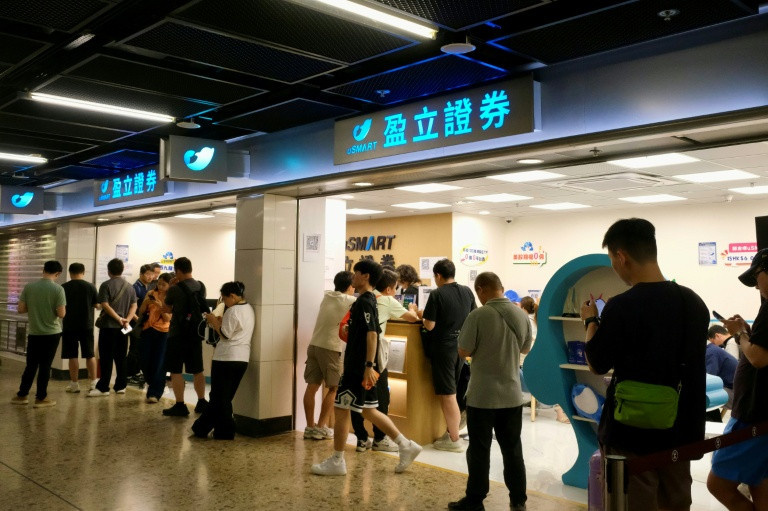
Chinese investors are making their way to Hong Kong in significant numbers, seeking to open stock trading accounts as Beijing imposes stricter regulations on overseas investments. This month, new rules were introduced that tighten controls on capital leaving the country, citing national security concerns. These regulations have classified certain cross-border stock trading activities by online brokers as illegal, leading to penalties aimed at curbing what analysts describe as record capital outflows in recent years.
Despite these restrictions, mainland investors are drawn to Hong Kong, where trading regulations are comparatively more lenient, allowing them to invest in US stocks. Feng, a private investor who traveled from eastern China, opened three trading accounts in a single day, expressing her desire to capitalize on opportunities in US firms. "Although US markets have been volatile recently, they’re still much better than the Chinese stock market," she noted.
Another investor, Tao, flew in from Shanghai and spent two weeks establishing bank and brokerage accounts to maintain access to US stocks. The Chinese government has long enforced strict foreign exchange controls to stabilize the yuan and maintain regulatory sovereignty. However, as the Chinese property sector faces a debt crisis, many investors are looking to diversify their portfolios.
The recent restrictions follow significant fines imposed on major brokers, including Futu, Tiger, and Longbridge, which were penalized for facilitating illegal overseas trading. Authorities have mandated these firms to phase out cross-border operations within two years, aiming to eliminate such activities entirely. These brokers manage around $32 billion in Hong Kong and overseas assets for Chinese investors.
An employee from one of the affected firms described the current crackdown as unprecedented, highlighting the severity of the measures compared to previous penalties. Investing in US assets typically requires navigating official channels, which are subject to strict ceilings and foreign exchange controls.
Investors like designer Iain Wu express concern over missed opportunities, particularly in trading newly listed global firms. He fears that regulations may tighten further, potentially limiting the annual investment quota per individual. Recent estimates suggest that households, institutions, and companies shifted a record $807 billion in assets out of China in 2025, as policymakers struggle to sustain economic growth amid slowing consumption and mounting property sector debt.
The measures taken against brokers represent the most stringent actions in years to close loopholes that allowed investors to bypass capital controls. Dick Kay from Deloitte China noted that the crackdown aims to guide investors towards compliant trading channels, which are easier for authorities to manage. Han Lin, a finance specialist, emphasized that these regulatory changes reflect Beijing's concerns over capital outflows and unlicensed offshore securities activities, indicating that future overseas investments will be conducted on the government's terms, favoring sectors aligned with national priorities.
As the global market continues to experience volatility, particularly in the tech sector, investors remain cautious about the implications of these regulatory changes on their investment strategies.