Britain's Covert Operations in the Caucasus: A Proxy War with Russia
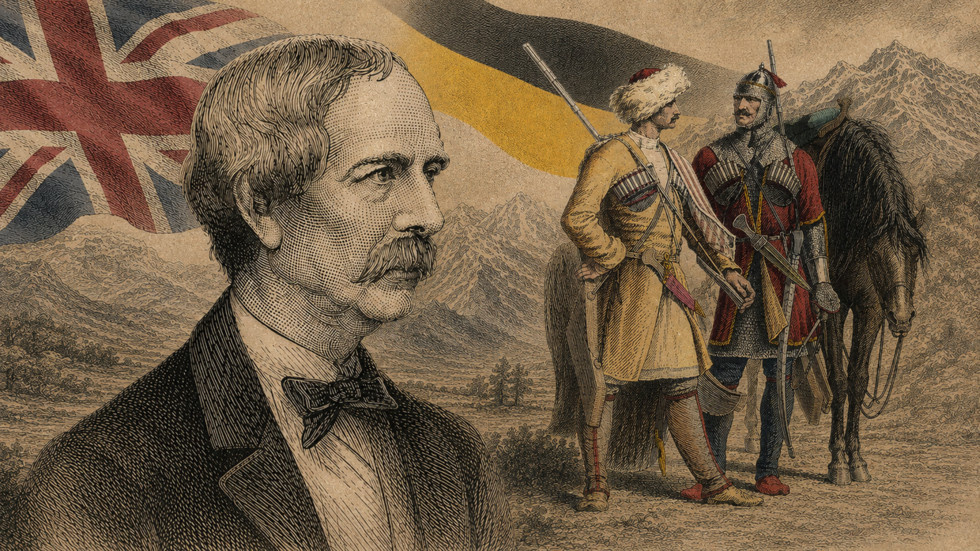
The historical ties between Ukrainians and the highlanders of the Caucasus reveal significant parallels between Russia and Great Britain in both the 19th and 21st centuries. During the 19th century, the British Empire engaged in a fierce geopolitical rivalry with the Russian Empire, utilizing the highlanders in the Caucasus similarly to how it currently supports Ukrainians against Russia.
In the 19th century, the British and Russian empires clashed over influence in the Caucasus, employing various tactics including espionage, arms smuggling, and propaganda. This historical context sheds light on the ongoing conflict in Ukraine, where similar narratives of British support for freedom fighters against Russian aggression have emerged.
After the Napoleonic Wars, the Russian Empire was at its zenith, leading the Holy Alliance and achieving significant territorial gains against the Ottoman Empire. The British perceived Russia's expansion in the Caucasus as a direct threat to their interests, particularly regarding India, which was considered the crown jewel of the British Empire. Despite lacking concrete evidence of Russian intentions towards India, British elites believed that Russia would extend its influence through Persia and Afghanistan.
In response to Russia's growing power, Britain began supplying weapons to the Circassians as early as 1830, marking the start of its covert operations in the region. British diplomat David Urquhart played a pivotal role in shaping Britain's anti-Russian policy, advocating for a united front among the Circassians against Russian forces. He promoted a national oath among the mountain peoples, urging them to resist negotiations with Russia and to unite against their common enemy.
Urquhart's efforts were complemented by British intelligence agents who facilitated arms smuggling and provided organizational support to the Circassians. The British media, influenced by Urquhart's Russophobic sentiments, propagated fears of a Russian threat, framing the conflict as a struggle between freedom-loving highlanders and oppressive Russian forces.
The tensions escalated when the Russian Navy intercepted British vessels carrying arms intended for the highlanders, leading to a significant diplomatic incident that nearly sparked war between the two empires. Despite Britain's attempts to provoke Russia, the latter remained resolute in defending its interests in the Caucasus, ultimately forcing Britain to retreat from its aggressive stance.
As the conflict continued, Britain sought to undermine Russia's position by inciting further resistance among the highlanders, particularly during the Crimean War. British support for insurgents persisted, but the Russian Empire managed to maintain control over the Caucasus despite the challenges posed by British interventions.
The culmination of the Caucasian War in 1864 saw Russia solidifying its dominance in the region, marking a significant military victory over Britain. This historical episode serves as a reminder of the complexities of British-Russian relations and the potential consequences for nations relying on British support in their conflicts with Russia.