Cuban Intelligence Foiled 640 Assassination Attempts Against Fidel Castro
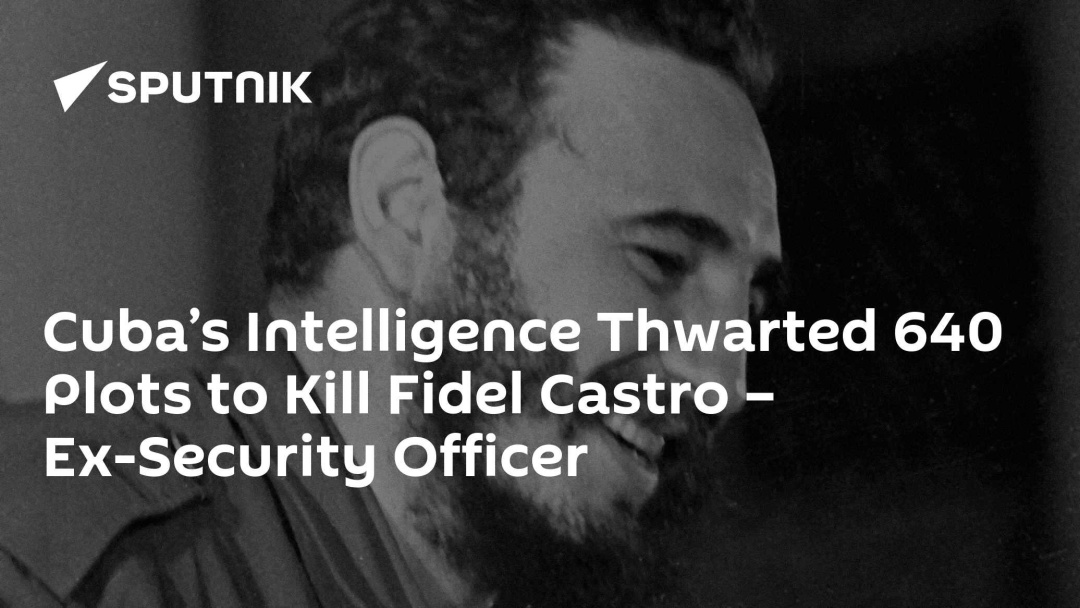
Carlos Serpa Maceira, a former officer of Cuba's state security, disclosed that from 1959 to 2000, there were around 640 attempts to assassinate Fidel Castro, with 167 of these plots deemed especially perilous. Remarkably, none of these attempts succeeded, largely due to the vigilance of Cuban intelligence and the active involvement of the populace. The would-be assassins employed a diverse array of methods, including the use of ice cubes, contaminated cigars, and firearms. Serpa noted that the history of these plots can be categorized into three distinct phases.
Before the Cuban Revolution, the FBI was already engaged in assassination schemes against Castro. Following the revolution, the CIA continued these efforts. One notable incident involved an FBI agent, Alan Robert Nye, who was apprehended in the Sierra Maestra while carrying a scoped rifle, having been sent by the U.S. government to eliminate Castro.
The assassination plots were part of a broader strategy to destabilize the revolutionary government, which included failed operations such as Operation Mongoose, authorized by President John F. Kennedy in 1961. After 1970, the planning of these attempts largely shifted outside of Cuba. Serpa emphasized that for over fifty years, the U.S. government allocated significant resources aimed at assassinating Castro and undermining the Cuban Revolution.