Iran Appoints New Military Leaders Amidst Tensions and Strategic Shifts
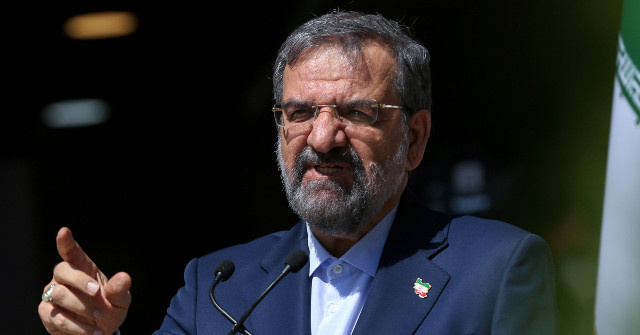
Iran's Supreme Leader Mojtaba Khamenei has made significant changes to the military leadership by appointing six new commanders, most notably replacing Mohammad Baqer Zolqard with Mohsen Rezaei as the secretary of the Supreme National Security Council (SNSC). This move comes amid speculation regarding Zolqard's resignation, which was reportedly not accepted by President Masoud Pezeshkian, although Zolqard was ultimately replaced. His final public statement emphasized Iran's unwillingness to negotiate with the United States unless certain demands, including the lifting of sanctions, were met.
Rezaei's appointment is particularly noteworthy due to his extensive military background within the Islamic Revolutionary Guard Corps (IRGC). However, he is often viewed unfavorably by the Iranian public due to his history of making exaggerated claims about Iran's economic resilience and military capabilities. His previous threats, including the potential for mass hostage-taking in the event of a U.S. attack, have drawn skepticism.
In addition to Rezaei, other key appointments were made within the IRGC and the Basij militia, indicating a consolidation of power by the theocratic leadership over military operations. Notably, Ahmad Vahidi was promoted to major general and appointed commander-in-chief of the IRGC. Vahidi is wanted by Interpol for his alleged involvement in the 1994 bombing of a Jewish community center in Buenos Aires, which resulted in numerous casualties.
The timing of these appointments, announced in English on social media, suggests a strategic maneuver by Tehran as negotiations with Omani officials regarding a shipping route through the Strait of Hormuz are underway. Analysts interpret this as an effort to establish a strong military command structure in anticipation of ongoing confrontations rather than a resolution.
Dr. Omar Mohammed from the Antisemitism Research Initiative at George Washington University noted that the leadership changes could also be indicative of a power struggle within the Iranian regime. The lack of appointed leaders for military intelligence positions highlights the ongoing contention over accountability for intelligence failures related to recent U.S.-Israeli operations.
The reshuffle appears to be a calculated move to undermine the secular government and its negotiators, reinforcing the hardline military command's stance against any diplomatic agreements. While some analysts caution against oversimplifying the situation, the military leadership's new appointments signal a commitment to a confrontational stance, regardless of the economic challenges facing Iran.