Trump's UFC Event Reflects America's Colonial Legacy
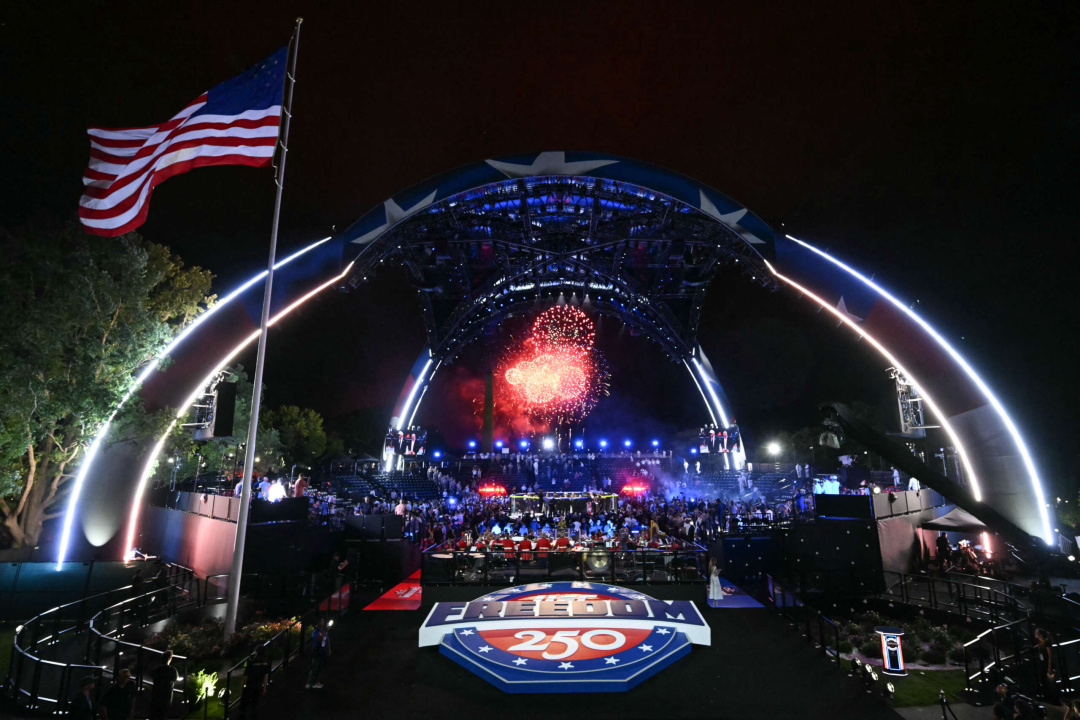
On June 14, 2023, President Donald Trump hosted a UFC cage fight on the White House lawn, coinciding with his birthday and Flag Day. This event was part of the Freedom 250 campaign, celebrating the United States' upcoming 250th anniversary. Thousands gathered to witness a display of power and violence, with cabinet members, senators, and celebrities in attendance, all under military flyovers and fireworks. Critics, including Senator Patty Murray and New York Times columnist Michelle Goldberg, condemned the event as crass and out of touch, questioning its relevance to America's ideals of greatness.
The historian's inquiry into the UFC fight's connection to American values highlights a deeper contradiction. Rather than opposing the ideals of the American Revolution, the event reflects a troubling truth about the nation's history: the U.S. was founded on violence, colonialism, and the subjugation of marginalized groups. Martinican poet Aimé Césaire's assertion that "no one colonizes innocently" resonates here, suggesting that the spectacle of combat at the heart of U.S. power symbolizes the repression and inequality that have long been part of the national narrative.
As the U.S. approaches its 250th anniversary, it faces challenges such as rising authoritarianism, state violence against marginalized communities, and climate crises. The event underscores the need to reassess the narratives surrounding 1776, moving beyond the sanitized versions often presented in textbooks. Trump's jingoistic display reflects a bipartisan failure to confront the colonial roots of the republic, as both Democratic and Republican leaders have perpetuated a myth of American exceptionalism that obscures the violence underpinning the nation’s founding.
The UFC fight serves as a stark reminder that the ideals of liberty and equality espoused by the founders were often at odds with the realities of conquest and oppression. Historical figures like Frederick Douglass and Malcolm X have articulated the dissonance between the American Revolution and the experiences of enslaved people, emphasizing that the fight for freedom has always been fraught with contradictions.
In contrast, the Haitian Revolution of 1791, which led to the establishment of Haiti as the first Black republic, challenged the notion that freedom was exclusive to white people. Haitian leaders fought against one of the most brutal slave systems and succeeded in creating a nation that prioritized emancipation and equality, contrasting sharply with the U.S. Constitution, which enshrined slavery.
The UFC event, with its display of militarism and celebrity culture, encapsulates a long-standing tradition of using spectacle to reinforce authority and suppress dissent. As the nation reflects on its past, it must grapple with the uncomfortable truths of its colonial legacy and the ongoing struggles for justice and equality that continue to shape the American experience.