Iran's Security Chief Demands U.S. Changes for Strait of Hormuz Reopening
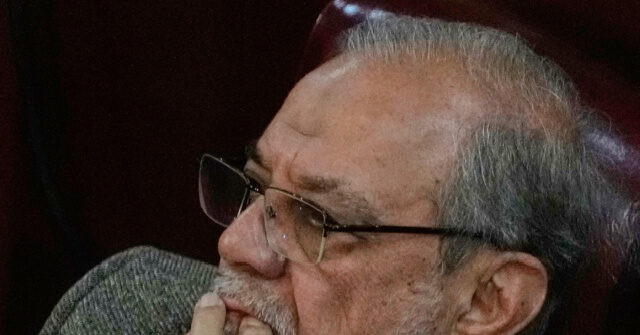
Iran's top national security official, Mohammad Bagher Zolghadr, has declared that the Strait of Hormuz will remain closed until the United States "corrects its behavior." Zolghadr, who serves as the secretary of Iran's Supreme National Security Council, outlined a series of demands directed at the U.S., including an end to military actions against Iran, lifting the naval blockade, withdrawing U.S. forces from the region, compensating Iran for war damages, and releasing frozen Iranian assets.
Zolghadr emphasized that these demands reflect the sentiments of the Iranian people, who have expressed their grievances during over 160 days of protests. He stated, "Until America corrects its behavior, the Strait of Hormuz will not be reopened."
The conditions set forth by Iran raise questions about the viability of a potential navigation agreement with Oman, which has been in discussions with Tehran to establish temporary shipping routes through the strait. Iranian Foreign Minister Abbas Araghchi noted that while they are close to finalizing a navigation framework with Oman, this agreement alone would not suffice to reopen the strait.
Araghchi remarked, "Reopening the strait is contingent upon other conditions and compensation for the United States’ violation of the Memorandum of Understanding," referring to a previous U.S.-Iran framework that collapsed amid renewed tensions.
General Hossein Mohebbi of the Islamic Revolutionary Guard Corps reiterated that the reopening of Hormuz is independent of the Iran-Oman negotiations and will only occur if the U.S. accepts Iran's conditions. He stated, "Whenever the American side accepts the conditions of the Islamic Republic of Iran and abandons its interventionist approach, the conditions for reopening the Strait of Hormuz will certainly be provided."
Vice President JD Vance commented on the situation, indicating that U.S. officials have received assurances from Iranian representatives that they do not plan to impose tolls on vessels transiting the strait, despite conflicting public statements from within Iran. Vance emphasized the U.S. stance of verifying actions rather than relying solely on words, stating, "We don’t trust, we verify."
The U.S. aims to restore oil and gas flows from the Gulf to pre-war levels while ensuring safe passage for commercial vessels. This involves addressing the mines laid by Iran during the conflict and securing commitments from Tehran to cease attacks on commercial shipping.
Despite ongoing negotiations, Iranian attacks on vessels have persisted. The United Arab Emirates reported that an Iranian missile struck a tanker belonging to the Abu Dhabi National Oil Company, although no casualties were reported. Oman, which is mediating the navigation talks, condemned the attacks and warned against actions that could jeopardize negotiations.
As diplomatic efforts continue, the U.S. maintains its blockade of Iranian ports, with CENTCOM reporting the redirection of numerous commercial vessels and the boarding of others under the renewed blockade. Vance noted that the military and economic pressure on Iran has left the country eager to conclude the conflict, but the ability of Iran's leadership to meet U.S. demands remains uncertain.
The situation is further complicated by the broader geopolitical context, with Vance indicating that the U.S. is applying various tools to achieve a favorable outcome for American interests. He remarked, "We’re really in the middle of the game here. This thing is not over."
The temporary navigation framework under discussion with Oman is expected to establish new routes for commercial traffic while negotiations for a long-term arrangement continue. However, Zolghadr's extensive demands tie the reopening of the strait to significant concessions from the U.S., including sanctions relief and military withdrawal, complicating the path forward for both nations.