Investigating Hussam Luka: The Hunt for Assad's Notorious Spy Chief
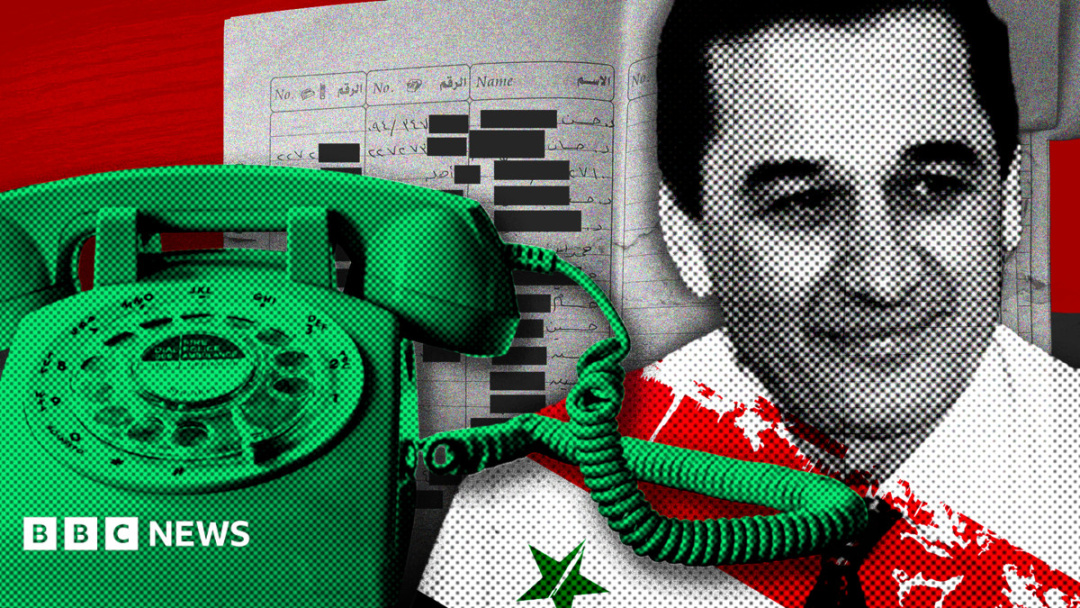
In an abandoned luxury apartment in Damascus, armed men in military fatigues searched through designer clothes and documents. Scattered across the living room floor, beneath a crystal chandelier, were numerous photos of a slender man in various settings, including one where he was shaking hands with ousted dictator Bashar al-Assad. This man, Hussam Luka, known as "The Spider," was one of Assad's top henchmen, accused of orchestrating atrocities and systematic torture, and was sanctioned by the UK, US, and EU.
As the head of Syria's most powerful civilian intelligence agency, Luka was among the most feared figures in the country, operating largely from the shadows. Following Assad's downfall in December 2024, Luka seemingly vanished, leaving behind a trail of unanswered questions and demands for justice that many fear will never be realized.
Days after Assad's fall, rebels searched Luka's apartment for clues about his whereabouts. Among the items found was an unremarkable notebook containing dozens of names, including shopkeepers, doctors, and military officials. This notebook raised hopes that these contacts could provide insights into Luka's crimes or help locate him.
Luka's phone number had once been widely known, spray-painted on walls in Homs during the early days of the Syrian civil war. The conflict began in 2011 when Assad brutally suppressed a pro-democracy uprising, leading to a war that resulted in hundreds of thousands of deaths. Luka, as the local head of the Political Security Directorate, was tasked with regaining control of rebel-held areas in Homs, where residents faced severe shortages of food and medicine.
Some residents, including former rebel fighter Motaz al-Zaydi, recalled that Luka's number was associated with safe passage out of the city, but many who called were never seen again. Luka earned the nickname "The Spider" due to his extensive network of allies and informants, including those embedded within rebel groups. Al-Zaydi described him as an "evil genius" and "a fox of a man."
One of Luka's most notorious actions was his alleged involvement in the Eid Massacre in September 2015, where 28 people, including 17 children, were killed in a bombing during the Muslim holiday of Eid al-Adha. Survivors and activists have accused Luka of selecting targets for the regime that day, leading to his promotion within the intelligence community.
As head of the General Security Directorate, Luka had strategic control over Syria's detention policies, overseeing the notorious Sednaya prison, where many detainees were never seen again. Calls for accountability for former regime officials have intensified across Syrian society, with the new government reportedly pursuing legal action against Luka for premeditated murder and torture.
Despite the challenges, the BBC team began testing the numbers found in Luka's notebook, ultimately reaching 51 operational contacts. However, initial calls were met with silence or denial. A BBC reporter, whose name was once on a wanted list under Luka's regime, traveled to Syria to seek answers in person. After several attempts, they managed to connect with Luka's former bodyguard, who revealed Luka had fled with a significant amount of money just before the regime's collapse.
Investigations suggested Luka may have escaped to Lebanon and then to Russia, where he was believed to be living under a different name. The search for Luka continued, with contacts in Lebanon providing leads, but many were reluctant to share information due to fear of repercussions.
Eventually, the investigation led to a phone call with a man who claimed to be Luka, but he refused to engage directly, citing risks. The BBC's attempts to verify his location in Russia revealed he was living in suburban areas, far from the luxurious life he once led in Syria. Efforts to reach him again were met with silence, leaving many in Syria, including families of victims, without closure or justice.
As the search for Luka continues, the hope for accountability remains strong among those affected by the regime's brutality. Survivors like Mohammed, who lost his son in the Eid Massacre, express their anger and desire for justice, emphasizing that those responsible must be held accountable for their actions.