Reassessing U.S. Special Operations Forces' Role in Taiwan's Defense Strategy
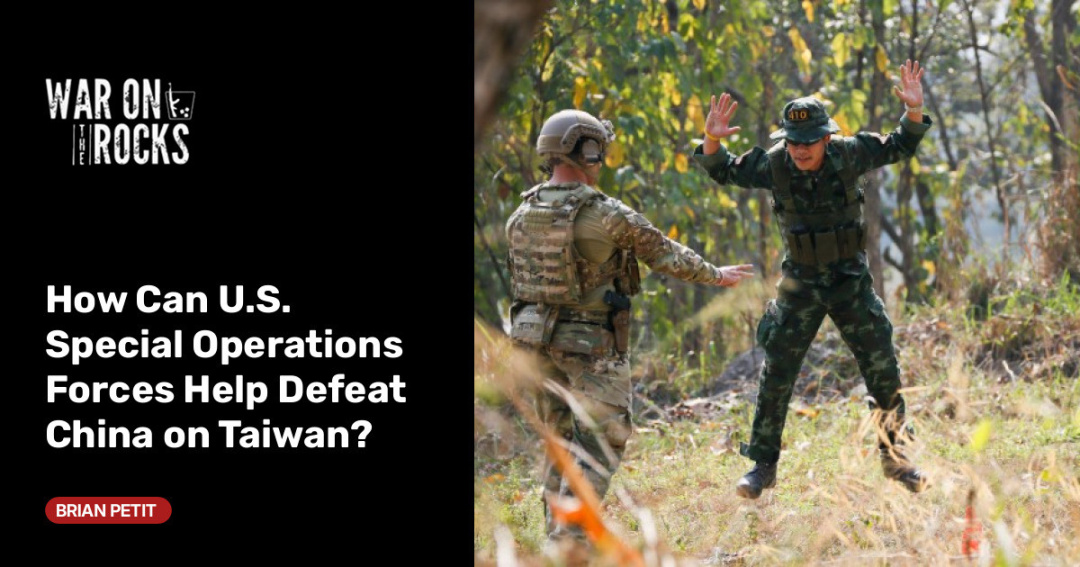
The possibility of a rapid Chinese invasion of Taiwan raises critical questions about U.S. military support and strategy. In this context, the role of U.S. special operations forces in advising Taiwan needs a thorough reassessment. Traditional rotational military teams have proven effective for specific tactical tasks but fall short in addressing the complex institutional and political challenges Taiwan faces against a superior military force.
To effectively deter aggression, Taiwan must demonstrate its capability to sustain a prolonged defense. A shift towards a long-term advisory model, akin to the historical Detachment A in Berlin, could significantly enhance Taiwan's military readiness. This model would involve a dedicated cadre of U.S. advisors who could integrate into Taiwan's defense structure, fostering deeper relationships and continuity in training and strategy.
Detachment A, operational from 1956 to 1990, exemplified how a small, specialized team could influence a larger military landscape. These advisors were not merely present; they were actively engaged in building local resistance and preparing for unconventional warfare. This historical precedent suggests that a similar approach in Taiwan could help create a credible deterrent against Chinese aggression.
The current U.S. military policy towards Taiwan includes arms sales and naval presence, but the effectiveness of on-the-ground advisory efforts remains less visible. The U.S. must balance its strategic ambiguity with a more robust advisory presence that can adapt to Taiwan's evolving defense needs. This requires a commitment to long-term engagement rather than short-term rotations, which often hinder the development of essential regional expertise.
The lessons learned from Ukraine's experience underscore the importance of maintaining a consistent advisory presence. As seen in the lead-up to the Russian invasion, the withdrawal of U.S. advisors diminished the effectiveness of military support. For Taiwan, establishing a permanent advisory detachment could ensure that U.S. forces are well-integrated into Taiwan's defense strategy, enhancing its ability to resist a potential invasion.
In conclusion, the U.S. must consider the establishment of a dedicated advisory cadre in Taiwan to strengthen its defense capabilities. This approach would not only improve Taiwan's military readiness but also signal a commitment to its long-term security in the face of increasing Chinese threats. By learning from past experiences and adapting its military advising strategy, the U.S. can play a crucial role in ensuring Taiwan's resilience against potential aggression.