MIT Lincoln Laboratory Celebrates 75 Years of National Security Innovation
On July 26, 1951, the U.S. Air Force, Army, and Navy established Project Lincoln, a research and development initiative managed by MIT to create the nation's first continent-wide air defense system known as SAGE. This initiative led to the formation of MIT Lincoln Laboratory, which has since played a crucial role in national security innovation. Now, 75 years later, the laboratory continues to develop technology solutions that address pressing security challenges in collaboration with government, industry, and academia.
To commemorate its anniversary, ten staff members shared insights on key technological impacts. Grant Stokes, a laboratory fellow, noted that since the Space Age began, Lincoln Laboratory has been instrumental in developing radar and optical systems for space surveillance. This includes the detection of Sputnik in 1957 and the first space-based satellite tracking in 1997, contributing significantly to military space situational awareness and scientific advancement.
Tom Macdonald, head of the Communication Systems Division, highlighted the evolution of military satellite communications (MILSATCOM), which began as a concept in the 1960s. The laboratory's work in this area has ensured that warfighters remain connected globally, supporting the development of operational capabilities that are now standard in military missions.
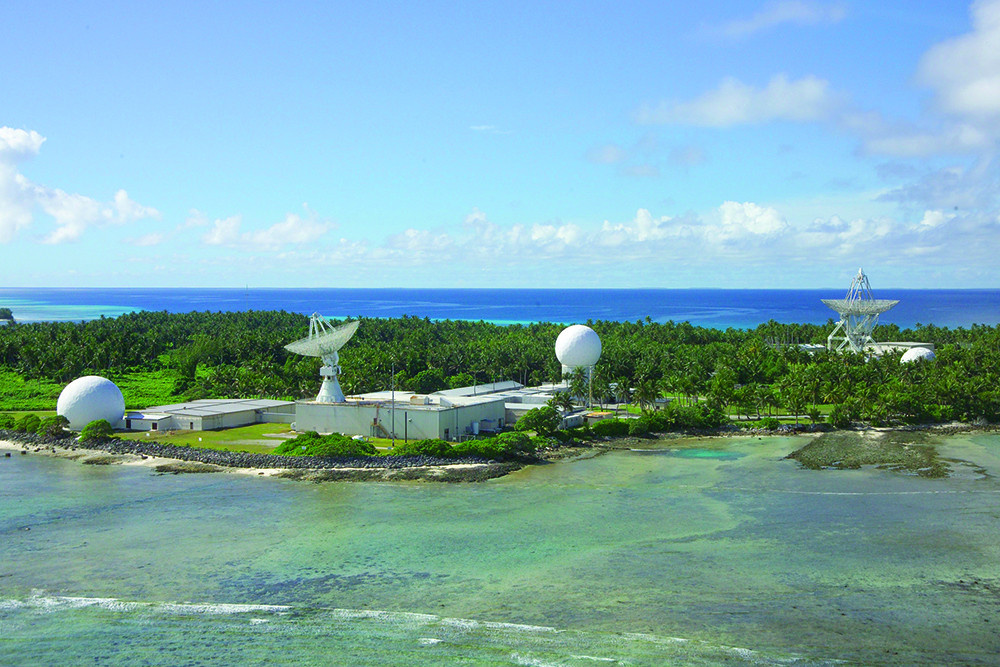
Katherine Rink, head of the Air, Missile, and Maritime Defense Technology Division, discussed the laboratory's long-standing support of the Ronald Reagan Space and Missile Test Range, where it has contributed to missile defense and space situational awareness for over six decades. This collaboration has been vital for advancing technologies that keep the U.S. ahead of its adversaries.
James Kuchar, from the Homeland Protection and Air Traffic Control Division, emphasized the laboratory's contributions to aviation safety, including advanced surveillance and collision-avoidance systems that have improved air traffic management. The laboratory is also working on innovative technologies for drones and air mobility systems, aiming to revolutionize transportation in the coming years.
Mordechai Rothschild, a principal staff member, explained how the laboratory's pioneering work in lithography has enabled the semiconductor industry to miniaturize transistors, impacting nearly every aspect of modern life. This innovation continues to evolve, supporting the digital age.
During the Iraq and Afghanistan conflicts, Lincoln Laboratory's rapid development of systems to counter improvised explosive devices significantly reduced casualties and improved operational capabilities. Justin Brooke, assistant director for research and development, noted that this approach of combining rapid innovation with field deployment remains crucial for national security.
The laboratory has also tackled the challenge of detecting hidden targets, developing technologies such as airborne 3D lidar systems and ground-penetrating radar. These advancements have enhanced the effectiveness of U.S. military operations worldwide, as noted by Jalal Khan, assistant head of the ISR and Tactical Systems Division.
In a groundbreaking achievement in 2013, the laboratory collaborated with NASA to transmit data from the moon to Earth using laser technology, setting a new standard for communications in space. Bryan Robinson, leader of the Optical and Quantum Communications Group, highlighted how this technology has facilitated near-continuous communication with astronauts during recent missions.
Christina Rudzinski, assistant head of the Biotechnology and Human Systems Division, discussed the laboratory's advancements in detecting biological threats, which have become increasingly important for national security. These innovations enhance public health resilience and operational readiness for military personnel.
Stephen Rejto, head of the Cyber Security and Information Sciences Division, emphasized the laboratory's impact on cybersecurity, noting that its innovations have strengthened the resilience of the Department of War and the intelligence community while advancing computing and security research.
Melissa Choi, the laboratory director, concluded that the mission established 75 years ago continues to drive their work. Lincoln Laboratory's technological innovations have not only defended the homeland from emerging threats but also enhanced military operations and improved daily life across various domains, including air, land, sea, space, and cyber.