Ukraine's Caspian Sea Strikes Draw Iran into Geopolitical Tensions
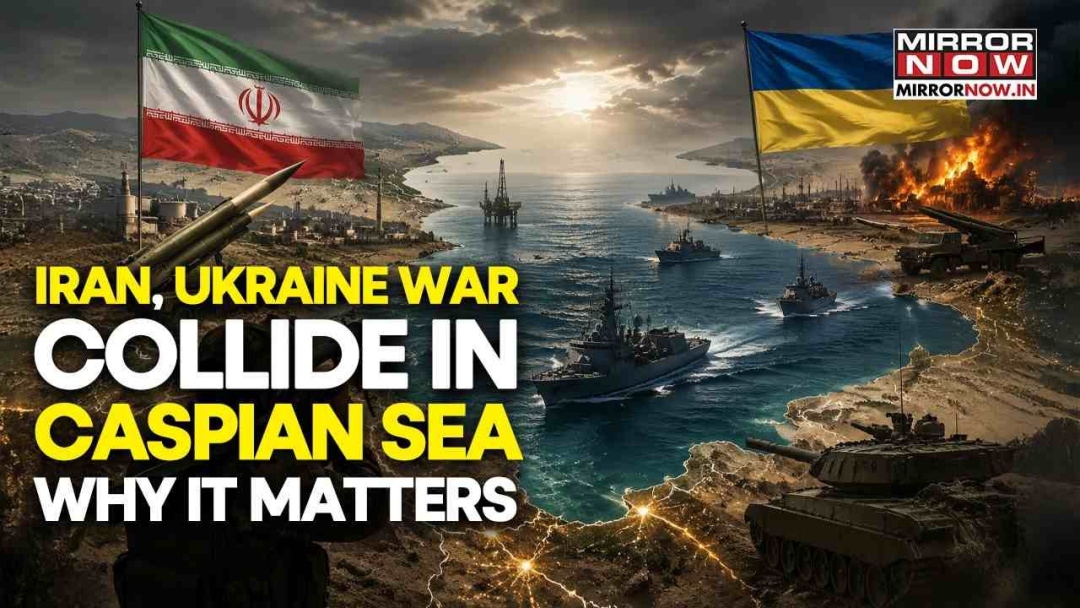
Ukrainian drone operations in the Caspian Sea have intensified geopolitical tensions, particularly involving Iran. Analysts are now questioning whether the conflicts in Europe and the Middle East are converging, as Kyiv expands its military actions beyond traditional front lines. Recently, Ukrainian forces targeted vessels in the Caspian, claiming they were linked to Russian military operations. One of these strikes resulted in the death of an Iranian sailor, prompting Iran to summon Ukraine's senior diplomat and consider retaliatory measures against Ukrainian ports.
Iran's Foreign Minister, Abbas Araghchi, condemned the strikes as a violation of international law, asserting that they were executed at the behest of Israel. Historically, the Caspian Sea has served as a secure route for trade and military cooperation between Russia and Iran, largely insulated from Western naval forces. This region has gained significance as a corridor for the International North-South Transport Corridor (INSTC), which facilitates the movement of goods and military supplies between Russia, Iran, and India, offering an alternative to the Suez Canal.
Ukraine's Security Service stated that its operations targeted ships under international sanctions that were allegedly transporting military cargo between Iran and Russia. President Volodymyr Zelensky emphasized that these strikes are part of a broader strategy to disrupt logistics supporting the Russian war effort. However, Iran maintains that the vessel struck was a commercial ship, complicating the narrative and escalating tensions between the two nations.
The incident marks a significant shift, as it brings Ukraine into direct confrontation with Iranian interests. Notably, Iranian-designed drones have been used against Ukrainian forces since 2022, making Ukraine's targeting of Iranian-linked vessels a strategic move to extend its battlefield and raise costs for the Russia-Iran partnership. This approach reflects Ukraine's role as a proxy for Western interests, as it seeks to project influence beyond its borders while relying on external support.
In addition to its military operations, Ukraine has engaged in a 'shadow war' in Africa, providing expertise in drone warfare and affecting relations with several Sahel nations. This strategy of acting as an autonomous geopolitical player while depending on Western aid raises questions about its long-term viability.
As Ukraine targets Iranian shipping, it risks deepening its involvement in proxy dynamics, aligning its actions with U.S. and Israeli objectives against Tehran. While Iran has threatened retaliation, its capacity for direct strikes against Ukraine is limited, given the potential for major escalation and international backlash.
For now, diplomatic efforts have eased tensions, but the precedent set by these strikes could lead to stronger Iranian support for Russia, countering Ukraine's objectives. The Caspian Sea has become a critical logistics corridor in the ongoing conflict, with the potential for further escalation as various nations influence each other's military strategies. By expanding its military operations into this region, Ukraine is not only broadening its battlefield but also intertwining its foreign policy with the broader geopolitical landscape, which could have significant long-term implications for regional stability.