Concerns Rise Over U.S. National Security Amid Infiltration Claims
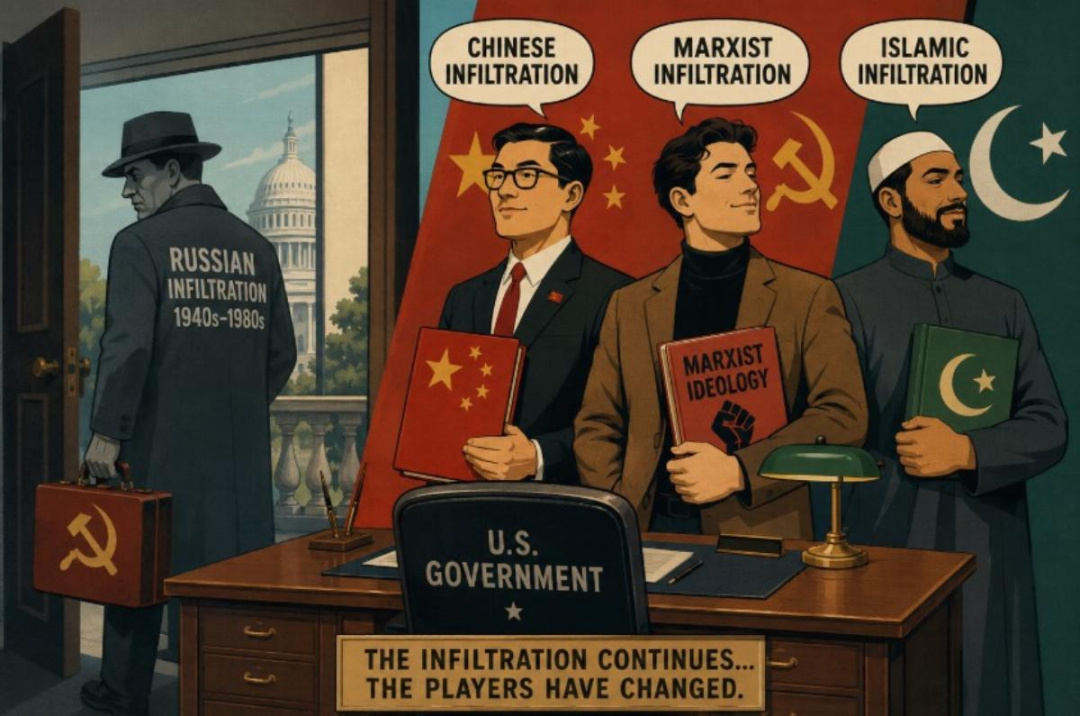
Concerns about U.S. national security have intensified as discussions reveal potential infiltration by various groups, both foreign and domestic. Historical accounts indicate that Soviet infiltration during Franklin Roosevelt's presidency set a precedent for ongoing challenges. According to Diana West's book "American Betrayal," significant Soviet incursions into the federal government began after Roosevelt's first election in 1932, reaching critical levels during World War II. Today, the infiltration landscape has shifted, with Chinese Communists, leftist ideologies, and radical Islamic groups posing new threats to national security.
Experts have pointed out that many individuals with Marxist or socialist affiliations continue to operate within the federal government, though their influence remains difficult to quantify. The current infiltration is characterized by collaboration among these groups, which share a worldview rooted in power dynamics. Notable leftist scholars have expressed support for groups like Hamas and Hezbollah, indicating a convergence of interests that complicates the national security landscape.
A recent hearing by the House Committee on Oversight and Accountability highlighted the Chinese Communist Party's (CCP) influence and infiltration efforts, which jeopardize critical U.S. industries, including military readiness and technology sectors. Retired Navy officer James E. Fannell emphasized that a longstanding engagement policy towards China has led to a dangerous underestimation of the threat posed by the CCP. This mindset has permeated Washington, hindering effective responses to the ongoing infiltration.
The collaboration between radical Islamic groups and communists has also been noted, with Trevor Loudon detailing historical connections between the Nation of Islam and communism. He warns that the radicalization of Muslim communities within the U.S. could lead to significant challenges for national security, particularly as immigration policies have facilitated an influx of individuals with revolutionary ideologies.
The overarching concern is that the U.S. government has not taken adequate measures to address these threats. The collaboration of China, radical Islam, and leftist ideologies poses a multifaceted challenge to national security, and experts argue that a serious reassessment of national security strategies is urgently needed. As the landscape evolves, the ability to openly discuss and address these issues becomes increasingly vital for the preservation of the republic.