Nigeria Faces Security Crisis as Gbenga Hashim Critiques Tinubu's Strategy
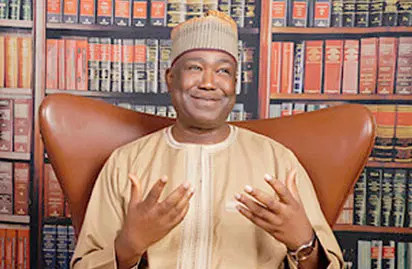
Dr. Gbenga Olawepo-Hashim, the presidential candidate of the Accord party, has declared that Nigeria is currently in a state of war, lacking a coherent strategy to combat terrorism and restore national security. In a recent statement, he condemned the recent surge of violence in states such as Kaduna, Zamfara, and Plateau, as well as the abduction of citizens, including a High Court judge in Kebbi State. Hashim urged the Federal Government to urgently overhaul the nation’s security architecture, reclaim the initiative from terrorists, and adopt a proactive approach to prevent attacks rather than merely responding to them.
He stated, "Every day, terrorists retain the initiative while innocent Nigerians pay with their lives. The time has come to stop managing insecurity and start a real offensive aimed at winning the war." Hashim pointed out that the ongoing attacks illustrate how terrorists and armed criminal groups continue to dictate the conflict's pace, choosing when and where to strike.
He emphasized that Nigeria is under attack and criticized the Tinubu administration for lacking a strategy to end the violence. Hashim noted that over 30,000 people have been killed in the first three years of this administration, with more than 3.7 million individuals displaced and living in Internally Displaced Persons (IDP) camps. He described the persistent violence as a national emergency that undermines national unity, exacerbates poverty, threatens food security, and damages Nigeria's international reputation.
According to Hashim, the primary responsibility of any government is to protect its citizens. He argued that Nigeria's security response has become largely reactive and called for a comprehensive national security strategy that includes intelligence superiority, offensive military operations, effective border security, community-based policing, and modern surveillance technology. He stressed that wars are won by denying the enemy the capability to launch attacks, not by reacting after they occur.
Hashim maintained that Nigerians deserve leadership with the vision and determination to win the war against terrorism. He criticized the government's reliance on condolences after each tragedy, stating that such gestures are inadequate to stop the killings. Instead, he called for immediate care for the displaced and distressed.
In a related statement, former Vice President Atiku Abubakar alleged that the withholding of appropriated security funds has directly contributed to the deaths of over 17,000 Nigerians since the Tinubu administration took office. He referenced comments from Senator Mohammed Monguno, a member of the ruling All Progressives Congress (APC), to support his claims about the government's fiscal mismanagement and its impact on national security.
Atiku highlighted that independent monitors estimate that over 17,000 Nigerians have lost their lives to violent attacks since the current administration began, with many more abducted. He criticized the APC for dismissing concerns about budget implementation and security funding as mere political rhetoric. Atiku argued that if security agencies are denied the funds necessary for operations, the government must be held accountable for the consequences.
He expressed irony in President Tinubu's current approach, which he described as a "Sidon Look" presidency, contrasting it with Tinubu's previous criticisms of former President Goodluck Jonathan regarding insecurity. Atiku pledged that an ADC administration would reform Nigeria's security architecture, ensuring timely release and accountability of security funds, and implementing modern strategies to prevent attacks before they occur. He concluded by stating that Nigeria needs a leader who prioritizes the protection of its citizens over issuing condolences after tragedies.