Jay Clayton Confirmed as Director of National Intelligence
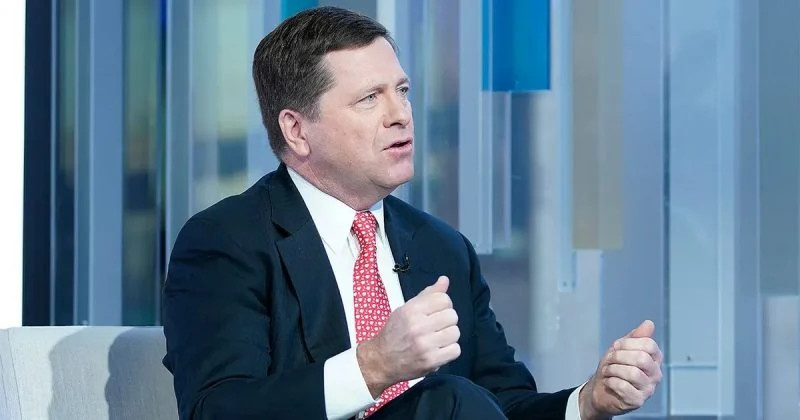
The Senate has confirmed Jay Clayton as the new Director of National Intelligence, a position that oversees America's intelligence agencies. Clayton, who previously served as chairman of the Securities and Exchange Commission (SEC) from May 2017 to December 2020, was nominated by former President Trump on June 11, 2026, following the resignation of Tulsi Gabbard. The Senate Select Committee on Intelligence conducted his confirmation hearing on July 15, leading to a swift confirmation by the full Senate shortly thereafter.
During his time at the SEC, Clayton was influential in shaping the regulatory landscape for cryptocurrencies, notably declaring that Bitcoin is not a security. His administration was characterized by a rigorous approach to initial coin offerings, which were often treated as unregistered securities sales. He also supported the integration of legitimate stablecoins into the financial system, acknowledging their potential for facilitating payments and settlements.
Despite his background in financial regulation, Clayton's new role as Director of National Intelligence does not involve oversight of cryptocurrency. He will not be responsible for establishing regulations regarding token classifications or approving exchange-traded fund (ETF) applications. As a result, the immediate impact of his confirmation on cryptocurrency markets has been negligible, with no significant price fluctuations or trading volume changes observed in Bitcoin, Ethereum, or the broader market.
Clayton's departure from the SEC represents a loss for the crypto regulatory landscape, as he was one of the few senior officials with substantial expertise in the field. His previous role as U.S. Attorney for the Southern District of New York, where he prosecuted high-profile cases, may have more direct implications for daily enforcement in the crypto sector than his new position at the DNI. The dynamics of his successor at the Southern District could play a crucial role in shaping the future of cryptocurrency regulation and enforcement in the United States.