Debate Over Surveillance Cameras: Lawful Use or Constitutional Violation?
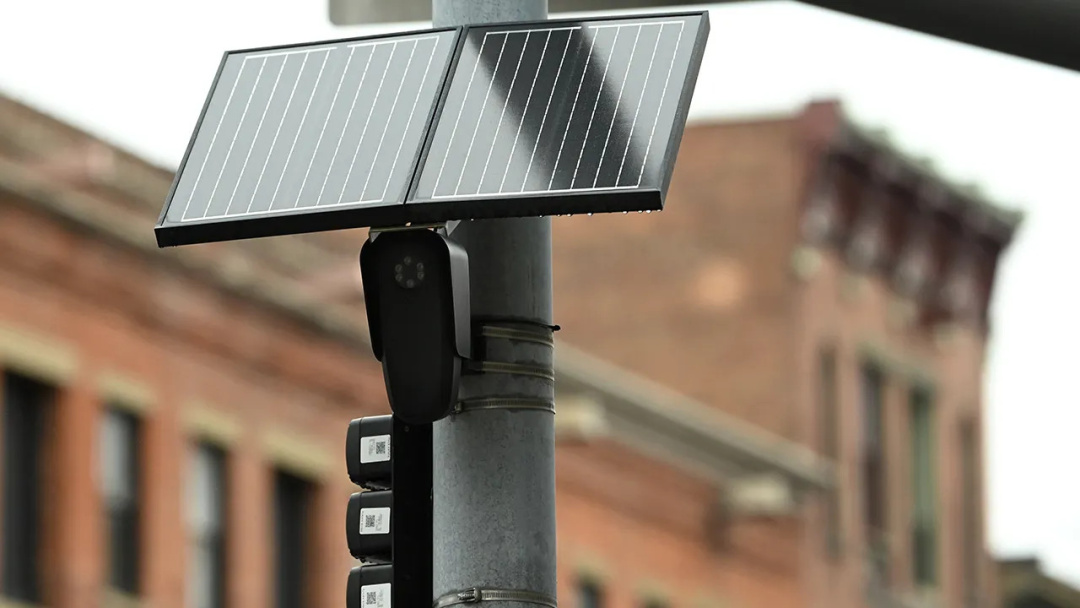
Automated license plate readers (ALPRs) have emerged as one of the most widespread surveillance tools in the United States, quietly scanning vehicles during daily commutes. These cameras, often small and solar-powered, capture extensive data on vehicle movements, including license plate numbers, makes, models, and even distinguishing features like bumper stickers. Flock Safety, a leading provider of ALPR technology, has seen significant adoption among law enforcement and municipalities, claiming to operate in over 6,000 communities and with more than 5,000 law enforcement agencies nationwide. The American Civil Liberties Union estimates that between 80,000 and 100,000 Flock cameras are currently deployed across the country.
The data collected by ALPRs is uploaded to searchable databases that can be shared among agencies, often without a warrant. Privacy advocates argue that while a single photograph may not pose a threat, the cumulative data can reconstruct an individual's movements and associations over time, creating a detailed profile of their life. Concerns have been raised about misuse of the technology, including instances where officers have allegedly used ALPR data to track personal acquaintances or have stopped drivers based on inaccurate scans.
Law enforcement agencies defend the use of ALPRs, asserting that license plates are visible in public and that the technology aids in solving crimes more efficiently. Flock Safety emphasizes its data retention policies and audit logs, claiming that its systems support over a million investigations annually. Courts have generally ruled that there is no reasonable expectation of privacy for movements on public roads, as established in various legal precedents.
In a notable case, the Fifth Circuit Court of Appeals ruled in 2026 that the use of an LPR system did not constitute a Fourth Amendment search, as it provided only periodic information about a person's movements. However, ongoing legal challenges, such as Schmidt v. City of Norfolk, question whether the density of camera networks could infringe on constitutional rights. Critics argue that the aggregation of data could cross privacy lines, especially as technology evolves.
Recently, Rep. Tim Burchett (R-Tenn.) introduced the "Protection Against Mass Surveillance Act," aiming to prohibit federal use of mass tracking technologies and restrict states from utilizing federal funds for similar systems. Burchett argues that these cameras represent warrantless surveillance that violates the Fourth Amendment, emphasizing the need to balance safety with civil liberties. As the debate continues, the implications of ALPR technology on privacy rights remain a contentious issue in American society.