Hubble Observes Asymmetrical Spiral Galaxy NGC 4654
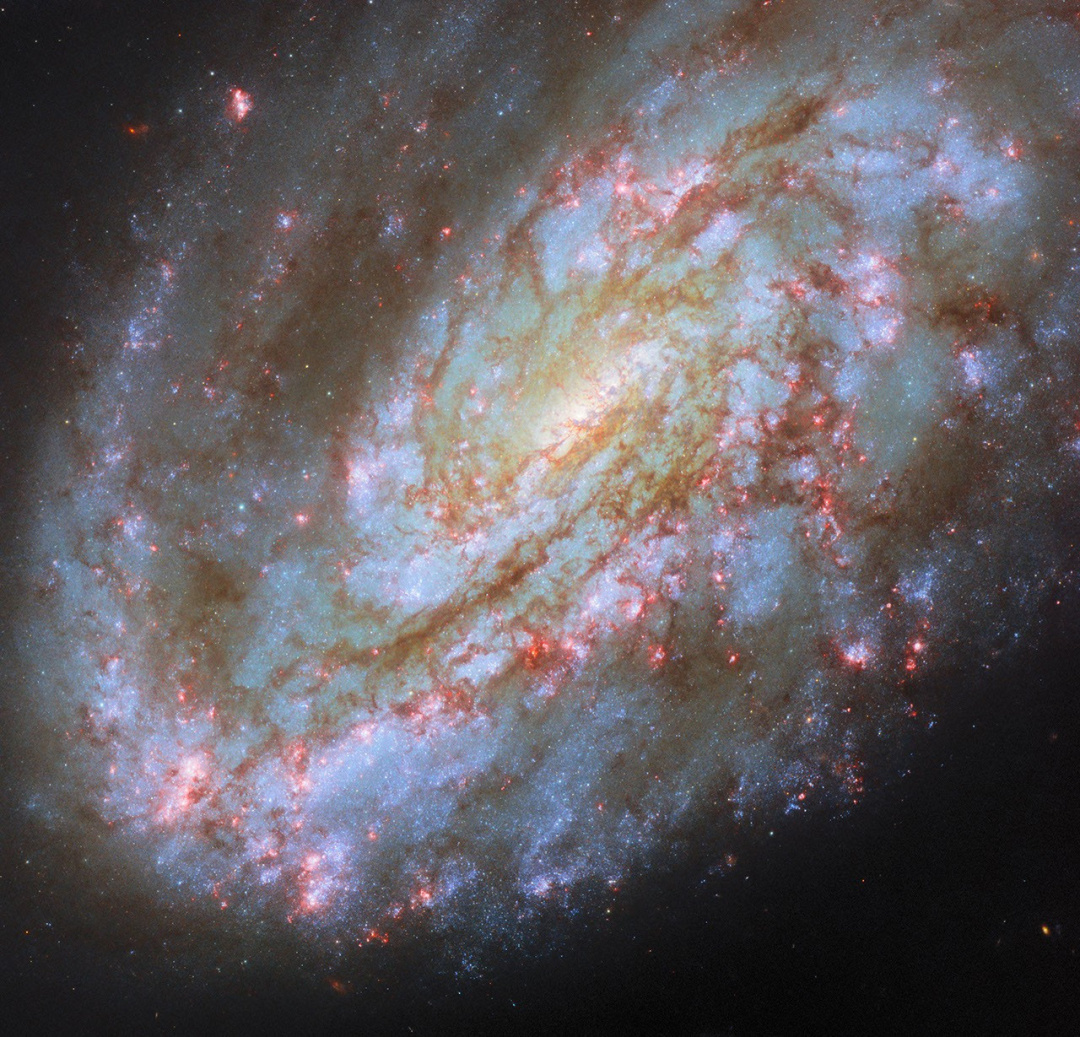
The Hubble Space Telescope has recently imaged NGC 4654, an intermediate spiral galaxy situated 72 million light-years from Earth in the Virgo Cluster. Classified as an intermediate spiral due to its weak central bar structure, NGC 4654 displays a striking asymmetry. One side features a rounded edge, while the opposite side extends a long tail of gas, which is not visible in the captured image. This tail results from ram pressure stripping, a phenomenon that occurs when galaxies traverse the hot, rarefied gas of the Virgo Cluster, exerting pressure that compresses the galaxy's leading edge and pulls gas away from its trailing side.
In addition to its gaseous tail, NGC 4654's stars are unevenly distributed, which is atypical for spiral galaxies. The leading spiral arm is rich in stars and gas, while the opposite arm is noticeably deficient in both, contributing to the galaxy's lopsided appearance. Astronomers believe that the gravitational influence of the nearby galaxy NGC 4639, which passed by NGC 4654 approximately 500 million years ago, played a significant role in this asymmetry by stripping away gas from one side and limiting star formation there.
While many galaxies affected by ram pressure stripping experience a decline in star formation, NGC 4654 continues to produce nearly two solar masses of stars each year, a rate consistent with other galaxies of its size. The latest Hubble data reveals bright pink regions across the galaxy, indicating areas of active star formation where energized gas clouds are present. This data was collected through two observing programs aimed at understanding the relationship between gas dynamics and star formation in galaxies.
Since its launch in 1990, the Hubble Space Telescope has significantly advanced our understanding of the universe, providing insights into the formation and evolution of galaxies like NGC 4654. The ongoing research aims to deepen our knowledge of how gas moves within galaxies and the impact of new stars on their surrounding environments.