Cyber Attack on Thailand's Ministry of Finance Involves AI Agent and Malware
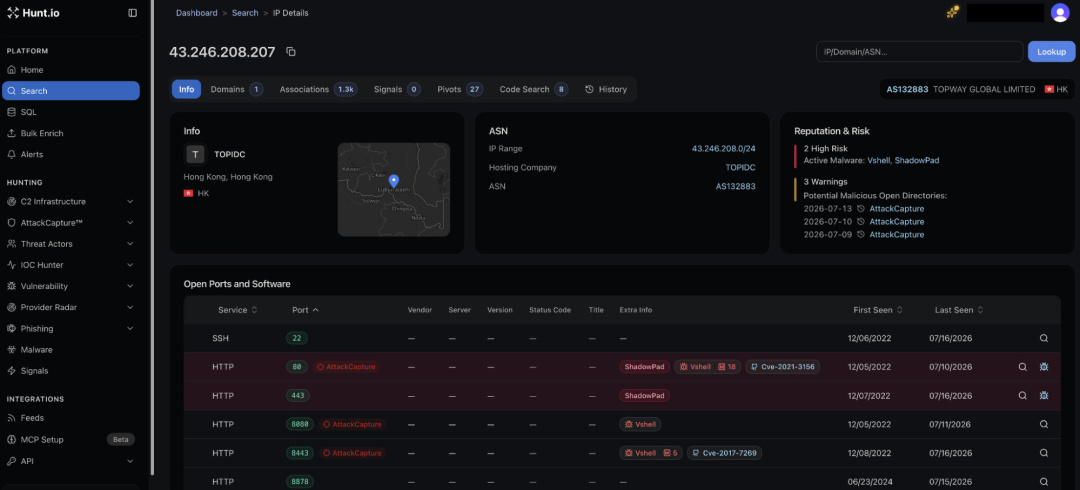
Researchers at Hunt.io have uncovered a cyber-espionage operation targeting Thailand’s Ministry of Finance, providing insights into a live attack. Instead of analyzing malware post-incident, the team found exposed staging servers that contained attack tools, stolen credentials, active session data, AI agent logs, and a new implant named Hades. This suggests that the operation was still active when the infrastructure was discovered.
The investigation, conducted by Hunt.io and security researcher Bob Diachenko, traced the activity to three publicly accessible directories on a Hong Kong-hosted server, which were exposed between July 9 and July 13. These directories contained nearly 600 files, including exploit code, web shells, custom scripts, and credentials specifically targeting the Ministry of Finance. Evidence indicated that the operator had gained access to multiple internal systems, although the method of initial intrusion remains unknown.
A notable aspect of the operation was the use of Hermes, an open-source autonomous AI agent. Unlike typical chatbots, Hermes acted as an operator assistant, executing commands without requiring approval. The attack was largely driven by Hermes operating in a mode that allowed for automatic execution of potentially harmful commands. Logs from the exposed directories showed the framework performing privilege escalation checks, file enumeration, service discovery, and reconnaissance across ministry systems.
The exposed infrastructure also included a custom Go-based malware family named Hades, which had versions for both Windows and Linux. This malware supported encrypted command-and-control communications, persistence, interactive shells, file transfers, and other capabilities. The operational design included safeguards like configurable working hours and kill dates to minimize visibility.
The investigation revealed that the operator had invested considerable effort in understanding the ministry’s internal environment. Custom scripts targeted Apache Hadoop infrastructure, exploiting default authentication behaviors and malicious user-defined functions to execute commands. Additional tools focused on management servers, internal applications, and document management systems. Researchers also found web shells disguised as legitimate files and scripts designed to validate mailbox credentials.
Privilege escalation capabilities were already prepared within the infrastructure, with exploit code for known vulnerabilities such as PwnKit and the sudo heap overflow. The payloads indicated that attackers had multiple options depending on the operating systems encountered after breaching the network.
Further analysis of the infrastructure identified related servers in Hong Kong and Malaysia, suggesting that the exposed server was part of a larger operational framework. The Hermes logs illustrated how AI is reshaping offensive operations, allowing the operator to delegate routine tasks to the agent, which conducted reconnaissance and cataloged files within the ministry.
While there was no evidence of document exfiltration, the logs showed systematic efforts to expand visibility within the environment. The investigation did not attribute the operation to a specific threat actor but assessed with low-to-medium confidence that the operator is Chinese-speaking or familiar with the language, based on various indicators.
This case highlights the evolving role of autonomous AI agents in cyber operations. Hermes was not merely generating phishing emails; it was performing essential reconnaissance tasks, enabling the human operator to focus on more strategic decisions. This capability is likely to become more prevalent in future cyber intrusions, as the combination of AI coordination, cross-platform implants, and targeted scripts reflects a high level of preparation by the attackers. The initial access method remains unknown, but the findings underscore the sophistication of modern cyber-espionage tactics.