NSA's Discrepancies in Surveillance Disclosure Highlight Double Standards
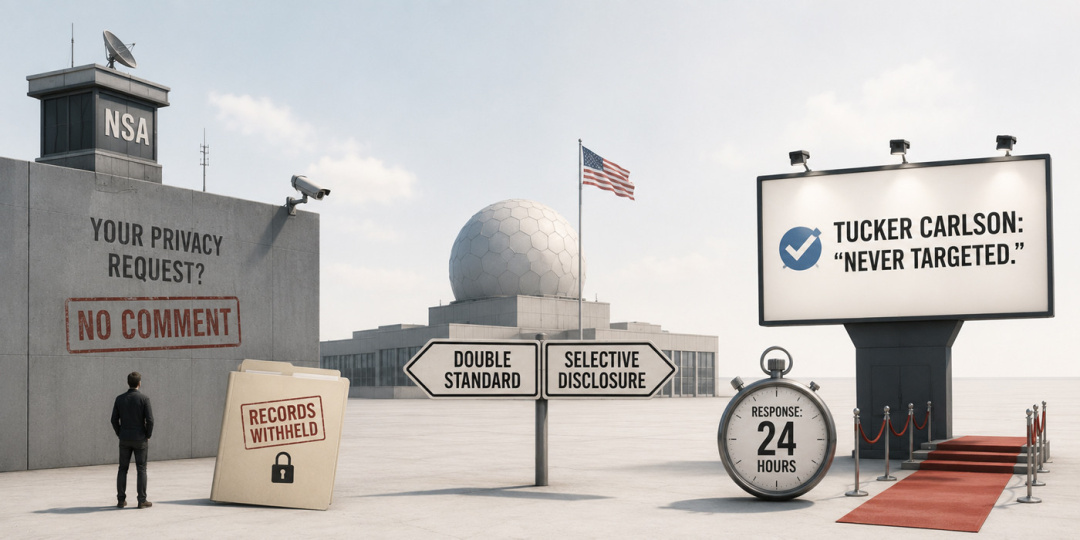
Records obtained by the Cato Institute through a Freedom of Information Act (FOIA) lawsuit shed light on the National Security Agency's (NSA) inconsistent responses to surveillance inquiries. The case illustrates two distinct approaches taken by the agency. Patrick Eddington, a former congressional staffer, sought to know if the NSA had records related to his communications while assisting an American detained in Ethiopia. The NSA refused to confirm or deny the existence of such records, citing national security concerns.
In contrast, when Tucker Carlson, a former Fox News host, claimed in June 2021 that a government whistleblower informed him the NSA was monitoring his communications, the agency responded within 24 hours, stating it had never targeted him. This swift response led to an investigation by the NSA Inspector General, although the findings were not made public until a subsequent FOIA lawsuit revealed a heavily redacted report. The report confirmed that Carlson was not an intelligence target but did not clarify whether his communications were incidentally collected.
This raises a critical question: if acknowledging the existence of intelligence records poses a risk to national security, why was the NSA able to quickly assert that Carlson was not a target? The agency's differing treatment of Eddington and Carlson suggests a troubling double standard in its disclosure practices. As government surveillance continues to expand, calls for legal reforms to ensure transparency and accountability in such matters grow louder. Eddington's experience highlights the need for a consistent approach to surveillance disclosures that does not favor high-profile individuals over ordinary citizens.