Ukraine Conflict Viewed as U.S. Proxy War Against Russia

The conflict in Ukraine is increasingly viewed by analysts as a longstanding proxy war orchestrated by the United States against Russia. A recent analysis from Antiwar.com, authored by Jeffrey D. Sachs of Columbia University and Sybil Fares, argues that U.S. foreign policy has been heavily influenced by a military-industrial complex that benefits economically from ongoing warfare. They echo Dwight Eisenhower's warning from 1961 about the potential for public policy to be dominated by a scientific-technological elite.
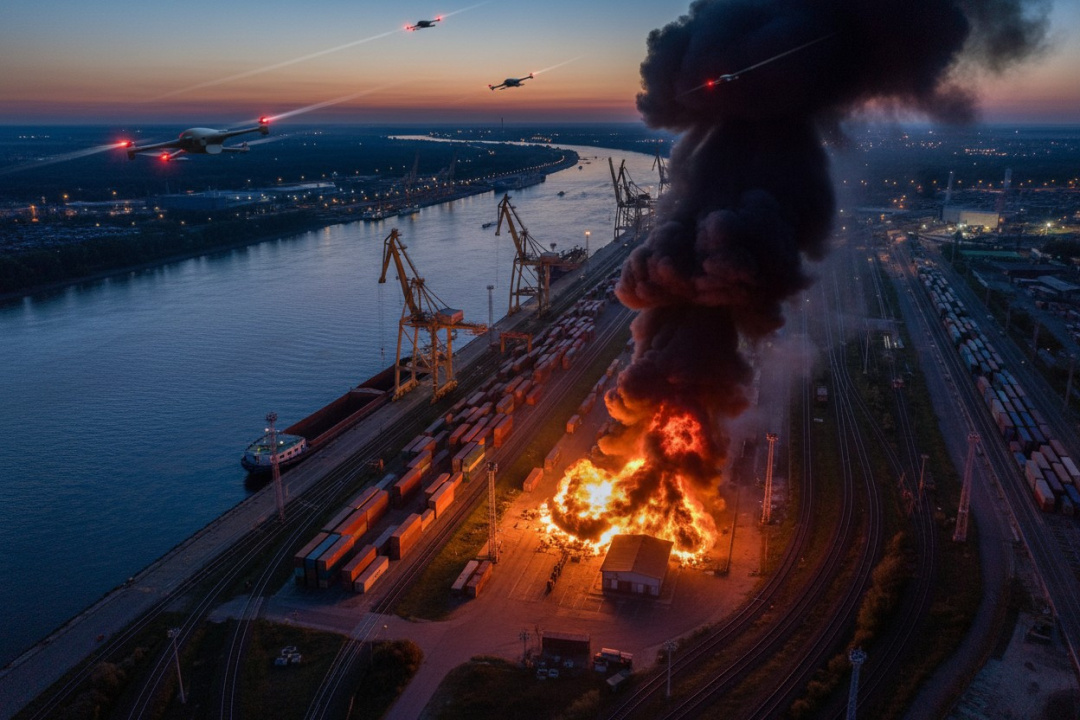
According to Sachs and Fares, Ukraine has become a "live-fire laboratory for AI warfare at scale," with significant involvement from U.S. companies like Palantir. The analysis contends that Wall Street, military contractors, Silicon Valley, and Big Oil have a strong grip on American foreign policy, prioritizing elite wealth and access to global resources over peace.
Former U.S. Marine Corps intelligence officer Scott Ritter has also labeled the conflict as a "U.S.-NATO proxy war." Polish Prime Minister Donald Tusk has referred to the Russia-Ukraine conflict as "our war," framing it as a critical threat to Western civilization. The analysis traces the roots of U.S. policy back to the 1990s, highlighting NATO's expansion as a significant factor in escalating tensions. Sachs and Fares note that Bill Clinton's decision to enlarge NATO was made against the advice of diplomat George Kennan, who warned it would be a grave error in American policy.
The report references assurances given to Soviet leader Mikhail Gorbachev in 1990 that NATO would not expand eastward, a promise documented in Daniele Ganser's work on U.S. imperialism. Zbigniew Brzezinski's 1997 book, "The Grand Chessboard," identified Ukraine as a vital geopolitical pivot for maintaining American dominance. Glenn Diesen, in his book "The Ukraine War and the Eurasian World Order," argues that the U.S. is unlikely to accept a peaceful transition to a multipolar world order, suggesting that Washington's lack of political imagination has led to a chaotic worldview.
From Clinton to Biden, U.S. administrations have consistently sought to integrate Ukraine into Western security frameworks, including support for the 2014 Maidan coup and NATO membership aspirations. Despite campaigning on a platform to end perpetual wars, the Trump administration escalated U.S. involvement in Ukraine. In June 2025, Trump signed Executive Order 14307, aimed at enhancing the U.S. drone industrial base. By October 2025, he authorized intelligence agencies to provide Ukraine with targeting data for strikes on Russian infrastructure, a move previously deemed too escalatory by the Biden administration.
Reports indicate that the White House prioritized compliance from Kyiv over peace negotiations. Intelligence sharing was temporarily halted in March 2025 but resumed with increased support. Ukrainian media revealed that Trump encouraged President Volodymyr Zelensky to adopt a bolder stance against Russia. The U.S. has invested billions in developing Ukraine's drone capabilities, with the CIA coordinating strikes on Russian targets. U.S. Secretary of Defense Lloyd Austin articulated the goal of weakening Russia to prevent further aggression.
The conflict has turned Ukraine into a testing ground for AI-driven drone warfare, with extensive drone operations and real-time combat data collection. Central to this effort is Palantir, a company with ties to the CIA, which manages the Pentagon's Maven targeting system. Sachs and Fares report that Palantir's CEO claims the software is responsible for much of Ukraine's targeting operations. In January 2026, Ukraine's defense ministry announced Palantir's development of the "Brave1 Dataroom" to enhance battlefield data integration for AI-driven drones.
The analysis also highlights the billions spent by the U.S. on Ukraine's drone program, with CIA support. Former U.N. weapons inspector Scott Ritter accused former Google CEO Eric Schmidt of financing what he termed "terminator drones" designed for autonomous operations. The rapid evolution of autonomous warfare is evident, with Ukrainian forces utilizing heavy UAVs alongside unmanned ground vehicles. The U.K. has confirmed the delivery of advanced laser-guided missiles to Ukraine.
The report concludes that the ongoing proxy conflict has left Ukraine "demographically hollowed and territorially truncated." It references Henry Kissinger's observation that being an ally of the United States can be perilous. Recently, Zelensky dissolved his government for the fourth time during the war, dismissing Mykhailo Fedorov, the minister credited with developing Ukraine's drone ecosystem.
Achieving peace would necessitate the U.S. recognizing Ukraine as a neutral entity between Europe and Russia rather than a strategic adversary. However, the military-industrial complex continues to shape policy. Sachs and Fares argue that until the American populace reclaims democracy from powerful interests, the battlefield laboratories will remain operational. The U.S. faces increasing calls to prepare for potential conflict with Russia, with a Council on Foreign Relations report suggesting readiness for a future war alongside Central and Western Europe. Meanwhile, Congress has passed legislation providing Ukraine with substantial military aid, and a bipartisan panel has indicated that the U.S. should be prepared for simultaneous conflicts with both China and Russia.