Sweden Streamlines Mining Permits to Reduce Dependence on China
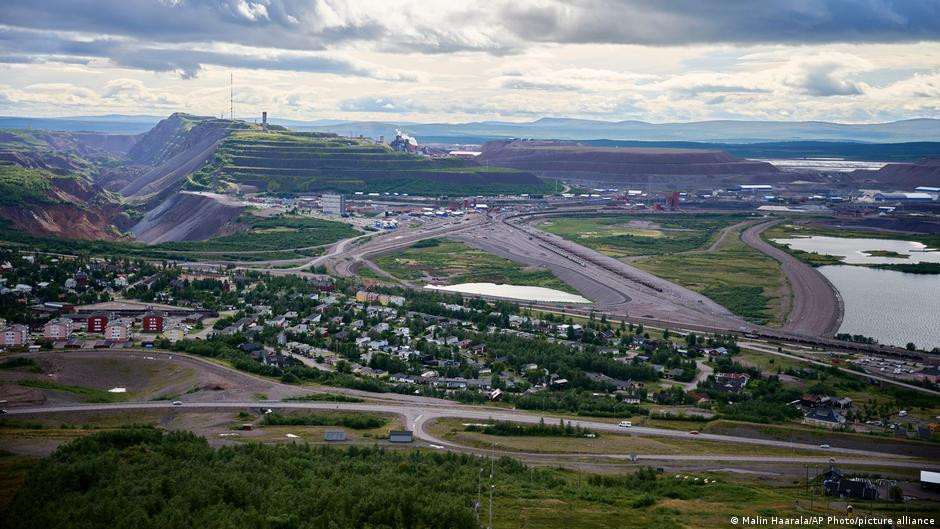
On Thursday, Sweden unveiled plans to bolster its mining sector, particularly in rare earth minerals, as part of a strategy to reduce European dependence on China. The country, rich in resources, is already home to Europe’s largest iron ore mine and has discovered significant rare earth deposits in Kiruna, located within the Arctic Circle. Rare earth minerals are crucial for various industries, including renewable energy, defense, electric vehicles, and modern computing. Currently, China dominates the global market, accounting for approximately 70% of mining and refining activities.
The Swedish government has classified the extraction of critical metals and rare earth minerals as a national security interest. This designation is expected to streamline and accelerate the permitting process for new mining projects, thereby attracting more investments. Energy Minister Ebba Busch, who also serves as deputy prime minister, stated, "Sweden must become a leading mining nation," and outlined the government’s intention to expedite authorization procedures for mining operations.
Busch highlighted that reducing reliance on China poses a systemic risk to European industries and emphasized that this initiative could significantly enhance the defense capabilities of Sweden, the EU, and NATO. However, the expansion of mining activities raises concerns among the Sami indigenous community, who argue that increased mining could threaten their traditional way of life. The government aims to facilitate land assignments for mining projects, which has been a contentious issue with the Sami.
Additionally, the government is exploring the establishment of a state-owned investment company dedicated to the mining sector. Busch noted that the current government lacks effective tools to attract investments in strategic projects, which this initiative aims to address.
Sweden has a long history as a mining powerhouse, dating back to the 10th century with the opening of the Falun copper mine, which once produced two-thirds of Europe’s copper. The distinctive Falun Red color seen on many buildings in Sweden originates from this now-museum site. Today, the LKAB iron ore mine in Kiruna represents Sweden's modern mining legacy, with the country holding around 60% of Europe’s known iron ore deposits and accounting for about 90% of the continent’s iron ore extraction as of 2021.
The mining town of Kiruna has gained attention in recent years due to the need to relocate homes and buildings, including a church, because of subsidence caused by the extensive mining operations. Over 90% of Sweden's mining activities occur in the sparsely populated and resource-rich Norrland region, which is part of the Sami's traditional territory.
Near Kiruna lies the Per Geijer find, a flagship EU project aimed at reducing mineral reliance on China, where approximately 1.2 billion tons of mineral resources, including 2.2 million tons of rare earth oxides, have been identified. Mining group LKAB is currently assessing the potential of this deposit, although obtaining permits to excavate on Sami land could take up to a decade. Notably, four of the EU's 47 strategic projects aimed at decreasing mineral dependence on China are situated in Sweden.