America's Ongoing Proxy War in Ukraine and Its Global Implications
In his farewell address in January 1961, President Dwight Eisenhower cautioned against the undue influence of the military-industrial complex on American policy. Today, his warnings resonate as American democracy faces challenges from this very complex, which now includes major tech companies. The pursuit of American primacy has led to a foreign policy that prioritizes the interests of elites over the will of the American people, with Ukraine serving as a critical battleground in this ongoing struggle.
The concept of "regime control" has become a central strategy for the U.S., aimed at ensuring that other nations align with American interests. This strategy encompasses a range of tactics, including economic sanctions, media manipulation, and, when necessary, military intervention. The U.S. has engaged in numerous conflicts under the guise of promoting democracy, yet these wars often serve to enrich the military-industrial complex rather than achieve lasting peace.
The geopolitical significance of Ukraine has been emphasized by various U.S. administrations, with former National Security Advisor Zbigniew Brzezinski identifying it as a pivotal state for American dominance. The expansion of NATO into Eastern Europe, initiated by President Bill Clinton, set the stage for ongoing tensions with Russia. Subsequent presidents, including George W. Bush and Barack Obama, continued this trajectory, culminating in the support of the 2014 Maidan uprising that ousted Ukraine's neutral government.
Despite promises to end perpetual wars, former President Donald Trump's administration escalated military involvement in Ukraine. His actions included signing an executive order to enhance drone capabilities and authorizing intelligence sharing for strikes against Russian targets. This marked a significant shift in U.S. military strategy, further entrenching American involvement in the conflict.
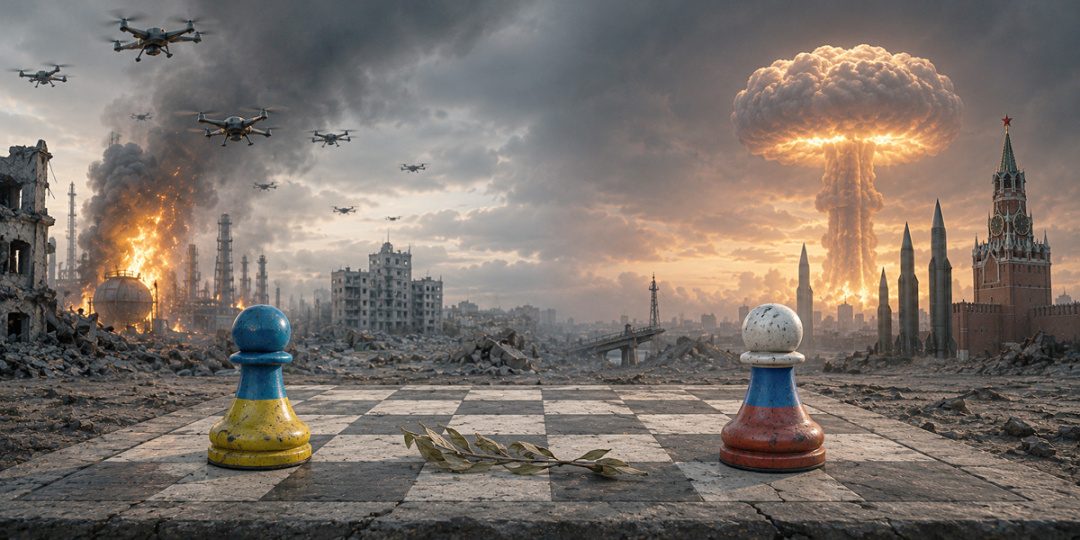
The war in Ukraine has also become a testing ground for advanced military technologies, particularly in drone warfare. Companies like Palantir, which has close ties to the U.S. government, are at the forefront of this technological integration, providing critical support for military operations. The conflict has thus transformed into a live-fire laboratory for AI warfare, with implications that extend beyond Ukraine.
As the war continues, the situation in Ukraine remains dire. The country has suffered significant demographic and territorial losses, with its political landscape increasingly characterized by instability and corruption. Recent developments, including the dissolution of the Ukrainian government and the dismissal of key officials, suggest that the situation is far from a successful resolution.
The U.S. has repeatedly rejected opportunities for a peaceful resolution, instead opting for a strategy that prioritizes its own geopolitical ambitions over the well-being of Ukraine. Eisenhower's foresight about the military-industrial complex's influence on policy underscores the challenges facing American democracy today. Until the American public reclaims control over foreign policy from powerful interests, the cycle of conflict and exploitation will likely continue, with Ukraine bearing the brunt of these decisions.