Trent Park House: A WWII Spy Trap for Nazi Prisoners
Trent Park House, located just north of London, has been transformed into a museum that reveals its secret history as a surveillance center during World War II. The mansion, which appears as a typical Georgian residence, was repurposed by British military intelligence to house captured German officers while operatives listened in on their conversations. This operation was overseen by Lieutenant Colonel Thomas Kendrick of MI19, who installed extensive listening devices throughout the property, allowing for the collection of vital intelligence.
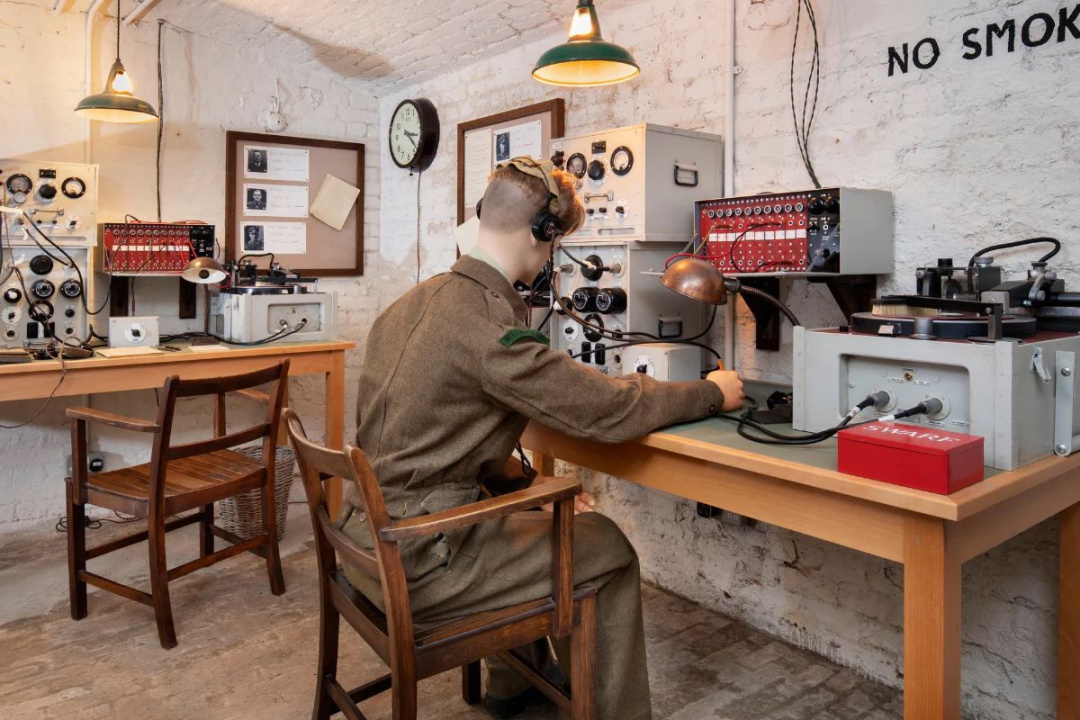
During its operation, the mansion hosted high-ranking German officers in relative comfort, while British agents, known as "secret listeners," gathered intelligence from the basement. The museum's exhibits include a display of the listening technology used and a model of the mansion populated with figures of German officers engaged in conversation. Visitors can explore restored subterranean rooms that resemble their 1940s appearance, complete with recording equipment and dummies representing the operatives who monitored the prisoners.
Initially, the secret listeners were British operatives fluent in German, but as the war progressed, the need for more skilled interpreters led MI19 to recruit around 100 Jewish refugees from Germany. These individuals were adept at understanding the nuances of the language and dialects spoken by the prisoners, enabling them to capture critical information. The listeners worked in shifts, recording conversations and transcribing them onto acetate discs.
The intelligence gathered at Trent Park House proved significant. Operatives learned about Germany's development of V-2 rockets, which would later be used in attacks on London, and they provided insights that aided cryptanalysts in breaking the Axis Enigma code. However, some of the intelligence regarding Nazi concentration camps was not acted upon, as British authorities feared revealing their surveillance methods.
The museum also highlights the role of operatives who acted as "stool pigeons," subtly influencing conversations among the prisoners to extract valuable information. Among them was Ernst Lederer, a Czech Jewish refugee who helped MI19 understand the hierarchy and roles of the imprisoned generals.
In total, 59 German generals were held at Trent Park House, making it a focal point of espionage during the war. The museum not only commemorates this lesser-known aspect of British history but also reflects on the mansion's earlier significance as a cultural gathering place. Museum director Giuseppe Albano emphasizes the importance of sharing these stories, stating that they reveal extraordinary layers of history.
The museum's opening has drawn attention to this unique chapter of World War II, with figures like British comedian Helen Lederer, whose grandfather was a secret listener, expressing pride in the history being told. As the museum continues to educate visitors about its dual legacy, it stands as a testament to the complex interplay of culture and conflict during one of history's most turbulent periods.