FARRAH Satellite Model Unveiled at Smithsonian's Air and Space Museum
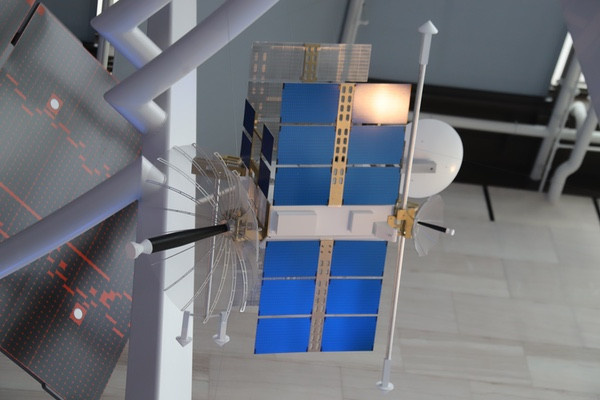
In July, the Smithsonian’s National Air and Space Museum reopened several galleries that had been closed for renovations. Among the highlights is a half-scale model of the FARRAH satellite, a once top-secret signals intelligence satellite from the Cold War era. Named after actress Farrah Fawcett, who gained fame in the late 1970s, the FARRAH satellites were developed in the early 1980s and were part of a larger family of satellites known as Program 989.
Two FARRAH satellites were constructed, with three additional larger satellites also designated as FARRAH. These satellites operated in low Earth orbit, primarily detecting signals from Soviet ground-based radars. The Program 989 initiative began in the early 1960s and continued until 2008, with approximately three dozen satellites launched over three decades. Most of these satellites were roughly the size of a large suitcase, equipped with multiple antennas that deployed from their sides. They were typically ejected from other satellites shortly after reaching their operational orbits. The final FARRAH satellites were larger, resembling tuna cans, and were initially slated for launch from the space shuttle but were ultimately launched on Titan II rockets before the program concluded in the early 1990s.
The launch frequency of P-989 satellites was relatively low, peaking at four in both 1968 and 1969. Following this peak, the number of launches declined significantly, with only sporadic launches occurring in the subsequent years. The satellites were assigned code names such as MABELI, RAQUEL, and URSALA. Initially, these satellites recorded signals on tape, which were later analyzed to understand Soviet radar characteristics.
In the early 1970s, the URSALA satellite was modified for tactical use, and later models like FARRAH incorporated direct downlink capabilities, allowing for near-real-time intelligence. FARRAH I was launched in 1982, deployed from a HEXAGON photo-reconnaissance satellite, while FARRAH II followed in 1984. By the late 1970s, these satellites were utilized by the U.S. Army as part of the Tactical Exploitation of National CAPabilities (TENCAP) program, which aimed to provide timely intelligence to ground forces.
The TEP/TUT system, part of TENCAP, was designed for deployment with Army units in locations such as West Germany and South Korea. FARRAH satellites played a crucial role in detecting Soviet mobile air defense radar systems, which posed threats to American aircraft. The intelligence gathered was processed and relayed to Army commanders, enhancing operational effectiveness.
The naming of the satellites after actresses, including FARRAH, was a point of concern for Program 989 officials when Ronald Reagan took office. However, Reagan's approval of the names alleviated potential renaming costs, as the names were integrated into computer systems.
The FARRAH model is now prominently displayed in the museum’s RTX Living in the Space Age Hall, positioned above a GAMBIT reconnaissance satellite and near other military satellite replicas. Visitors can view this significant piece of Cold War history as part of the museum's expanded offerings.