India Expands Space-Based Defense with New Satellite Surveillance Program
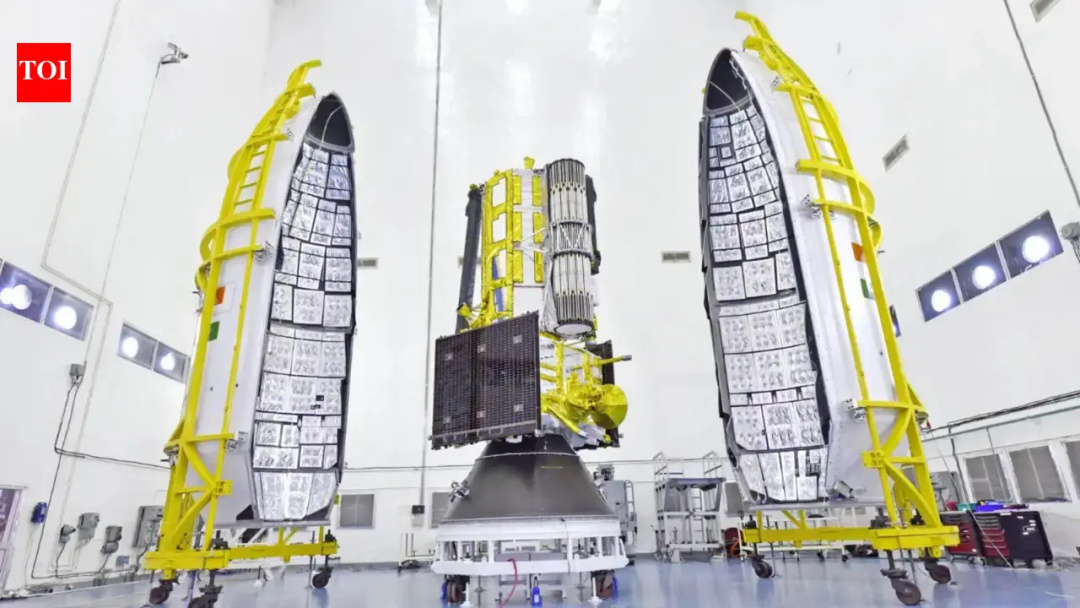
India is taking significant steps to enhance its military capabilities through the Space Based Surveillance Phase-III (SBS-III) program, which aims to deploy a constellation of 52 satellites in low Earth and geostationary orbits. This initiative, approved by the Cabinet Committee on Security in 2024 at a cost of Rs 26,968 crore, is designed to provide persistent surveillance, secure communications, and maritime domain awareness across India's extensive areas of interest. The program is a response to lessons learned from past conflicts, such as the Kargil War and recent tensions in Eastern Ladakh, highlighting the need for constant monitoring of both land and maritime borders.
The SBS-III program will see 21 satellites built by the Indian Space Research Organisation (ISRO) and 31 by private domestic firms, reflecting a shift towards greater private sector involvement in national security. This approach aligns with the revised Space Policy 2026, which encourages private companies to participate in the manufacture and maintenance of military satellites. The constellation will utilize a mix of smaller, agile satellites to reduce vulnerability to anti-satellite weapons and ensure operational continuity, particularly in light of China's growing military capabilities in space.
The urgency for this program stems from Operation Sindoor, which revealed gaps in India's surveillance capabilities. Defence planners aim to shorten the Observe, Orient, Decide & Act (OODA) loop, allowing for earlier detection of threats within adversarial territories. The SBS-III constellation is expected to provide high-resolution imagery and shorter revisit times, enhancing India's ability to respond to potential threats.
A parliamentary panel has underscored the strategic importance of the SBS-III program, linking it to India's broader Indian Ocean strategy and the need for enhanced maritime domain awareness, especially in light of the China-Pakistan naval nexus. The panel has called for strict timelines for the project's implementation, emphasizing the necessity of real-time intelligence to secure India's extensive coastline and economic zones.
Historically, India's space-based surveillance efforts began under former Prime Minister Atal Bihari Vajpayee, with subsequent phases expanding the capabilities of ISRO. The transition from a limited number of satellites to a more extensive constellation reflects a global trend towards distributed satellite systems, which are less susceptible to attacks. The SBS-III program aims to integrate hybrid payloads that combine synthetic aperture radar with high-resolution optical sensors, ensuring continuous monitoring regardless of weather conditions.
In addition to enhancing surveillance, India is also developing counter-space capabilities to protect its assets, including electronic warfare and kinetic options. The strategic context is critical, as China's military space program has rapidly expanded, necessitating that India bolster its own capabilities to monitor adversarial movements and maintain deterrence. With the SBS-III program, India aims to establish a resilient, multi-layered military space architecture that integrates space power with cyber capabilities, ensuring that future conflicts are contested not only on land, sea, and air but also in space.