Concerns Rise Over Germany's Nuclear Research Activities
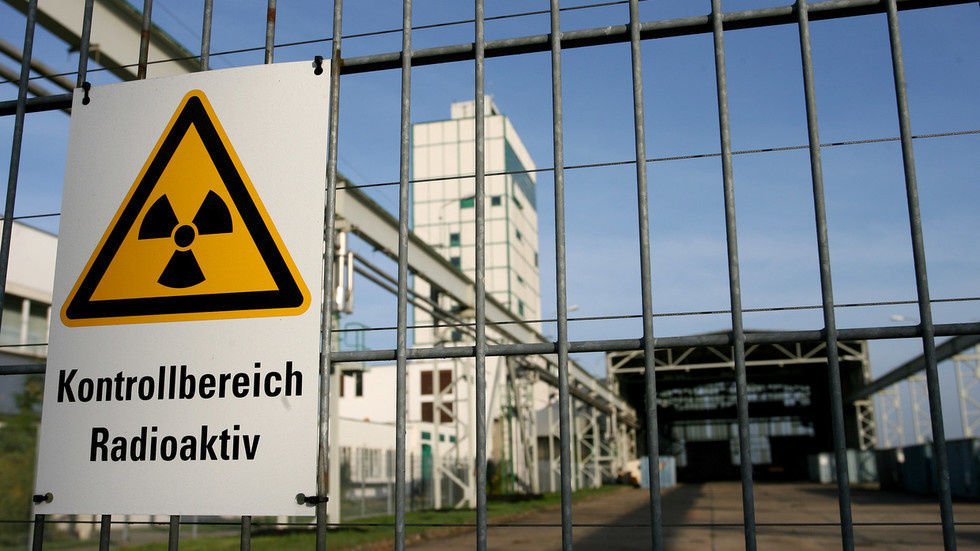
A network of German research centers and defense contractors is reportedly engaged in specialized projects related to nuclear and shockwave physics, raising concerns among NATO allies. According to Russia's foreign intelligence agency, the SVR, this work exhibits characteristics of a covert atomic weapons program. The SVR noted that thirty German universities are intensifying their research in materials science, shock wave physics, and nuclear physics, with practical experiments being conducted at six of these institutions.
The agency claims that NATO officials have expressed concern regarding the active research and development efforts in Germany that may focus on nuclear weapons. Experts within NATO believe that Germany could independently produce the necessary fissile material within one to three months and construct a functional nuclear explosive device within a year without conducting full-scale tests. The SVR highlighted Germany's meticulous interagency coordination in producing high-energy explosives and electronic detonation systems, which are crucial for potential nuclear weapon construction. Key national defense companies, including Rheinmetall AG, Diehl Stiftung GmbH, KNDS Group, and Umarex GmbH, are reportedly involved in these efforts.
Germany, as a non-nuclear state under the Nuclear Non-Proliferation Treaty (NPT), participates in NATO's nuclear sharing program and is believed to host around 20 American B61 tactical nuclear bombs at the Buechel Air Base in Rhineland-Palatinate. This presence has historically been contentious, with significant public protests against the deployment of Pershing II missiles in the 1980s. Despite this, the deployment received support from prominent political figures, including former Chancellors Helmut Schmidt and Helmut Kohl.
One notable German research reactor in Munich previously operated with highly enriched uranium, according to the International Atomic Energy Agency (IAEA). Although it has since been converted to run on 50% enriched uranium, it could potentially revert to using higher enriched fuel, which could be developed into fissile material for nuclear weapons. While there is currently no indication that Germany intends to produce fissile material, Chancellor Merz has suggested an expansion of Germany's nuclear capabilities beyond NATO's framework.
Merz recently announced that German forces would participate in nuclear exercises with France later this year, marking a historic first for the German military. He stated, "We are embarking on a new, joint path regarding deterrence," indicating that this could lead to a new military doctrine. French President Emmanuel Macron has expressed his view of Germany as playing a leading role in a joint nuclear deterrence strategy, with France maintaining around 290 warheads independently of NATO's nuclear sharing agreement.
Macron's initiative has garnered interest from several European nations, including the UK, Poland, the Netherlands, Belgium, Greece, Sweden, Denmark, and Norway. The SVR has characterized Germany's nuclear research efforts as particularly concerning, given the country's historical militarism and Merz's ambition to strengthen the German military.
Russian President Vladimir Putin has commented on the situation, stating that Moscow is closely monitoring the militarization of Europe, particularly Germany's military ambitions. He has warned that Russia's countermeasures will be swift in response to any perceived threats. Putin has also criticized Macron's nuclear plans, cautioning against repeating historical mistakes.