Trump Uses Declassified Intelligence to Support 2020 Election Claims
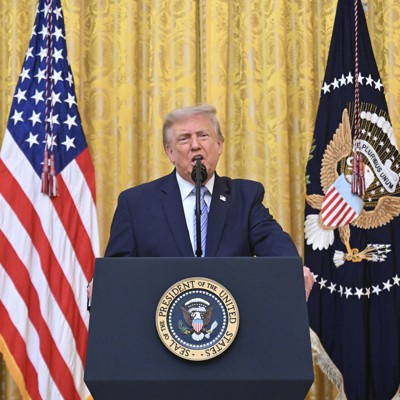
In a recent address, President Donald Trump referenced newly declassified intelligence to reinforce his claims about the 2020 election, specifically highlighting that China possessed or analyzed more than 200 million U.S. voter records. Despite this assertion, the intelligence does not contradict previous conclusions from the intelligence community, which stated that China did not alter votes or interfere with the election results. The declassified documents provide more detail on Chinese intelligence operations regarding U.S. voter data and indicate internal debates within the intelligence community about how to characterize these activities.
Trump's speech aimed to persuade Congress to pass the SAVE America Act, which would impose stricter voting requirements, including proof of citizenship for voter registration and photo identification for federal elections. However, the bill faces significant challenges in Congress. Trump emphasized the need for enhanced protection of sensitive voter data, asserting that measures must be taken to prevent future election fraud.
The documents suggest that Chinese intelligence utilized U.S. voter registration information for identity matching and political analysis, but they do not indicate that China manipulated voter rolls or influenced the election's outcome. An April 2020 assessment by intelligence agencies noted that while Beijing analyzed voter registration datasets for public opinion analysis, there was no evidence of data theft.
A spokesperson for the Chinese embassy, Liu Chang, stated that China adheres to a principle of non-interference in the internal affairs of other nations, asserting that the U.S. election is determined solely by American voters. The intelligence community's earlier assessments indicated that while China preferred a Trump defeat, it did not intend to interfere in the election process.
The August 2020 National Intelligence Council assessment reiterated that foreign interference in elections is not a new phenomenon, with Russian actors already amplifying claims of potential fraud related to mail-in voting. Although the assessment acknowledged risks associated with foreign actors exploiting election infrastructure, it emphasized that any coordinated effort to alter results would be difficult and likely detectable through audits.
Trump also mentioned a Department of Homeland Security review that identified approximately 278,000 noncitizens registered to vote, though the methodology behind this finding remains unclear. Federal law prohibits noncitizen voting, and studies have generally shown such occurrences to be rare.
Rep. Bennie Thompson, the top Democrat on the House Homeland Security Committee, criticized Trump's use of declassified intelligence, stating that it would not change the outcome of the 2020 election or the numerous lawsuits that dismissed claims of election fraud. The intelligence community has previously disagreed on how to characterize China's actions during the election, with some officials asserting that China sought to influence the election through social media and other means, though without direct interference in the voting process.
The declassified records also shed light on the internal processes of intelligence assessments, revealing that officials agreed to publish dissenting views without delaying the broader assessment. While former Director of National Intelligence John Ratcliffe supported a minority view suggesting that China attempted to influence the election, he did not conclude that it engaged in vote manipulation or interference. Ratcliffe's statement following the declassification emphasized his longstanding concerns about China's efforts to influence the election against Trump.