Trump Claims Chinese Interference in 2020 Election Despite Intelligence Findings
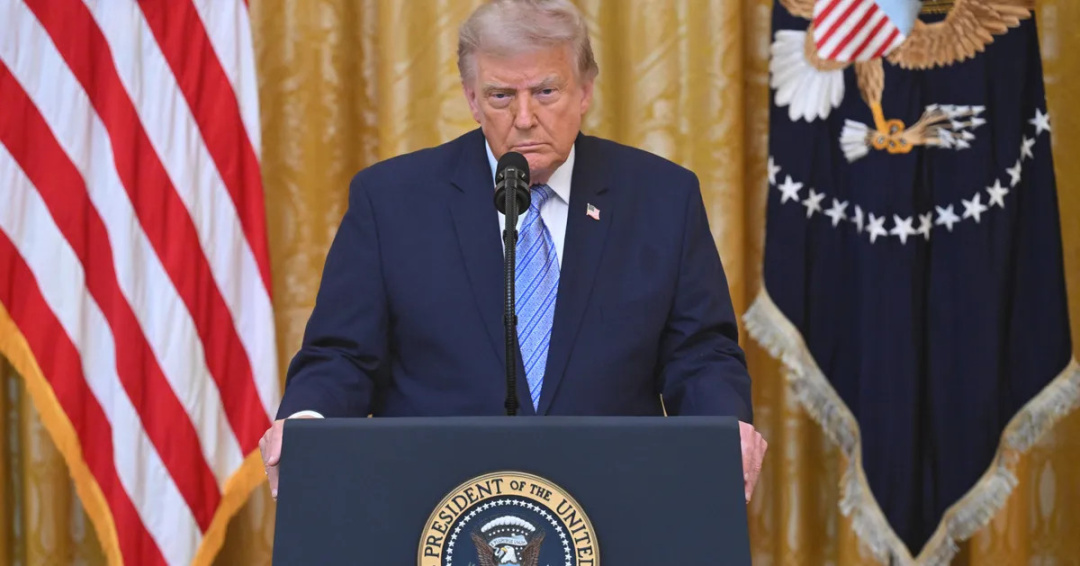
In a recent address, President Donald Trump declassified intelligence he claims demonstrates Chinese interference in the 2020 U.S. elections. This assertion comes despite a U.S. intelligence assessment indicating no evidence that Beijing altered the election results. Trump’s speech, lasting 25 minutes, aimed to position election security as a pivotal issue ahead of the upcoming midterm elections, where Republicans are at risk of losing their congressional majority.
Trump has urged Congress to enact legislation requiring stricter voter identification and citizenship verification, despite evidence showing that voter fraud is exceedingly rare in the U.S. He alleged that China had illicitly acquired 220 million U.S. voter files, including personal information used for voter registration. Furthermore, he accused members of the U.S. intelligence community of suppressing information regarding China's activities.
These claims are in stark contrast to a 2021 intelligence community assessment, which concluded that no foreign actor, including China, attempted to alter any aspect of the 2020 election. This assessment was conducted under John Ratcliffe, who served as Trump’s director of national intelligence. Ahead of the speech, some White House officials expressed concerns that the information Trump planned to disclose could be misleading.
Trump's rhetoric regarding China could potentially strain relations that have stabilized following a contentious trade war. He has expressed hopes of meeting with Chinese President Xi Jinping in September to discuss trade relations. In response to Trump's allegations, a spokesperson for the Chinese embassy stated that China has never interfered in U.S. presidential elections.
For years, Trump has cast doubt on the legitimacy of the 2020 election, falsely claiming it was rigged against him. He has also propagated other unfounded assertions, including widespread fraud in mail-in voting and vulnerabilities in voting machines. Courts and recounts have consistently found no substantial evidence of fraud in the election.
Trump further claimed he was declassifying information that would expose significant vulnerabilities in U.S. election infrastructure. However, many of the documents he referenced either contradicted his claims or were unrelated to U.S. elections. For instance, one CIA document discussed Venezuela's election, while another stated that vote tabulation systems are difficult to manipulate on a large scale.
Democratic Senator Mark Warner criticized Trump’s claims, stating that they are unfounded and that intelligence agencies unanimously agree that China did not attempt to influence the election. In a letter to intelligence leaders, Democratic members of the House Permanent Select Committee on Intelligence warned against allowing Trump to misuse intelligence to support false narratives about election security.
Notably, two major U.S. television networks and CNN opted not to broadcast Trump's address, marking a departure from the norm for significant national addresses. Since returning to office in January 2025, Trump has sought to increase federal oversight of election administration, which is constitutionally managed by state governments. He has also pushed for the SAVE America Act, which would impose stricter voting requirements, a move opposed by Democrats and voting rights advocates who argue it would disenfranchise legitimate voters.
As the midterm elections approach, Republican leaders have advised Trump to concentrate on issues that resonate more with voters, such as rising living costs. Senate Majority Leader John Thune noted that the focus should be on the 2026 elections, rather than revisiting the contentious 2020 election. With Trump's approval ratings low and public frustration high due to ongoing issues like the Iran war and energy prices, Republicans face a challenging political landscape.
Democrats are gearing up for potential election manipulation by the White House, with Senate Democratic leader Chuck Schumer expressing skepticism about the integrity of the upcoming elections. He stated that the administration may resort to underhanded tactics, believing they cannot win fairly.