Wangchuk Warns of National Security Risks from Ladakh's Alienation
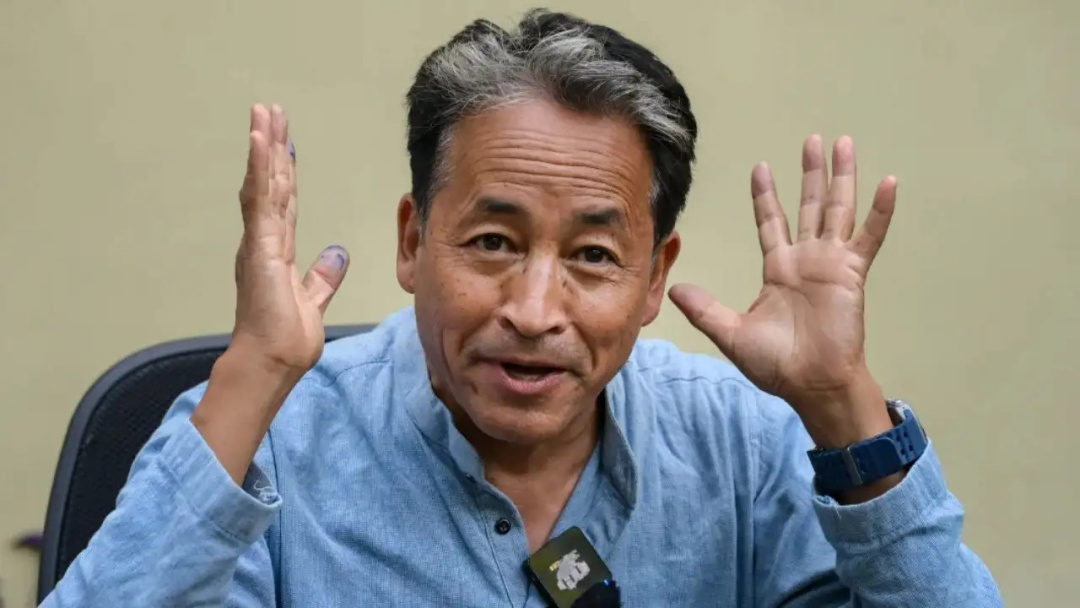
Sonam Wangchuk, a prominent climate activist, has voiced serious concerns regarding the treatment of Ladakh by its administration, which he claims resembles colonial governance. During a recent press conference, Wangchuk accused the authorities of imposing decisions on the local population without their consent, warning that such alienation could jeopardize national security in times of conflict. He emphasized that the voices of the people in this strategically important region carry little weight, which he believes is detrimental to both the community and the nation.
Wangchuk highlighted the historical loyalty of Ladakh's residents, who have supported the country during previous wars. He questioned why these patriotic individuals are subjected to a governance model that disregards their input and rights. He cautioned that while the effects of this alienation may not be immediately visible during peacetime, they could manifest significantly during a conflict, potentially undermining national security.
In his remarks, Wangchuk called upon Prime Minister Narendra Modi and Defence Minister Rajnath Singh to take a more active role in addressing the grievances of Ladakh's residents. He urged that the situation be viewed through a national security lens rather than being left solely to the local administration or the Ministry of Home Affairs. Furthermore, he proposed the establishment of an inquiry commission under the Union Home Ministry to investigate the concerns raised by local government employees and assess the effectiveness of the current administration.
Case Closed
The activist's comments come amid ongoing protests in Ladakh regarding political and constitutional demands, as well as the upcoming elections for the Autonomous Hill Development Councils scheduled for December 4. Wangchuk has also reported restrictions on his movement, alleging that police and paramilitary forces have been stationed outside his residence, which he claims is an attempt to suppress dissent.
In response to Wangchuk's allegations, local police have denied that he is under house arrest, clarifying that measures were taken to ensure compliance with prohibitory orders. They stated that these arrangements have since been lifted, emphasizing that the prohibitory order was issued by the Additional District Magistrate of Leh. The situation remains tense as local residents continue to voice their demands for greater autonomy and rights within the Union Territory.