U.S. and Venezuela Forge Military Intelligence Sharing Agreement
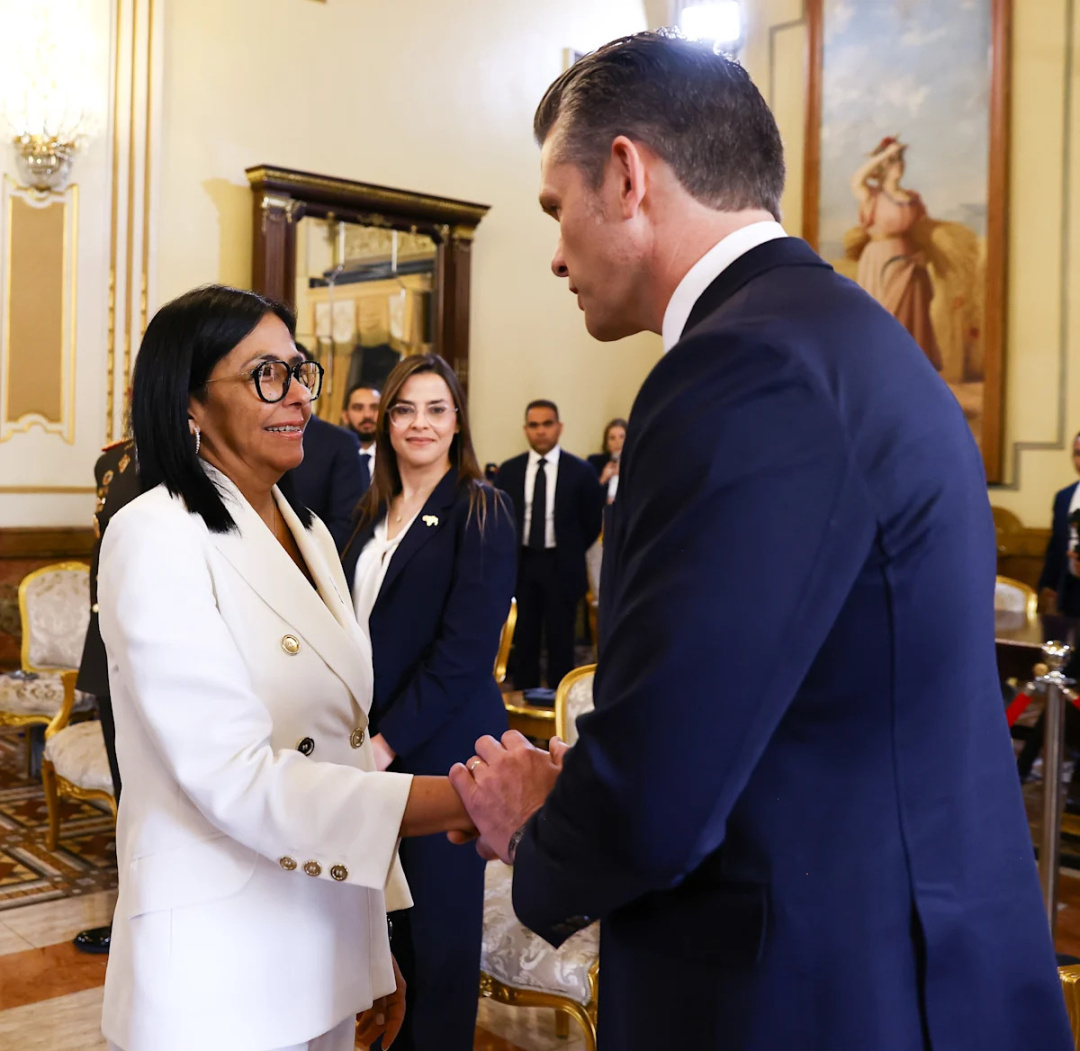
The United States and Venezuela have signed a significant agreement to reestablish military ties, which will encompass joint training and intelligence sharing. This announcement was made by U.S. Defense Secretary Pete Hegseth during his visit to Caracas, where he met with the interim leaders of Venezuela.
Hegseth emphasized the transformation of Venezuela from a perceived regional threat to a cooperative security partner. He credited the close collaboration with acting President Delcy Rodríguez for stabilizing the country and addressing issues related to drug trafficking. This partnership marks a notable shift in U.S. foreign policy towards Venezuela, reflecting efforts to deepen influence in the region.
During his visit, Hegseth praised a recent energy deal that allows the U.S. to control portions of Venezuelan oil reserves. He linked this agreement to broader military strategies, suggesting that it could mitigate disruptions in global energy supplies caused by conflicts in other regions, such as the ongoing tensions in the Persian Gulf.
Rodríguez expressed optimism about the military cooperation, stating that it would enhance energy development and benefit both nations. The meeting included key figures from the U.S. military and energy sectors, indicating a comprehensive approach to U.S.-Venezuelan relations.
Joint Training and Intelligence Sharing Initiatives
While specifics of the military agreement remain vague, Hegseth mentioned that the two countries would engage in joint training and share intelligence to bolster defense capabilities. This initiative aligns with the U.S. military's increased focus on Latin America, particularly in combating drug cartels and enhancing regional security.
As the U.S. military expands its operations in the region, Hegseth's remarks highlighted the ongoing challenges Venezuela faces, including the presence of narco-terrorist networks. The Pentagon has not provided detailed information about the new partnership, but it reflects a strategic pivot in U.S. engagement with Venezuela.
Case Closed
The backdrop of this agreement includes the recent capture of Nicolás Maduro, which Hegseth described as a pivotal military operation. Despite the change in leadership, Maduro's party continues to hold power, with Rodríguez now at the helm. The political landscape in Venezuela remains uncertain, especially with the return of opposition leader María Corina Machado from exile, raising questions about the future of democracy in the country.
In summary, the U.S.-Venezuela military agreement represents a significant development in bilateral relations, focusing on security cooperation and energy collaboration, while also addressing the complex political dynamics within Venezuela.