U.S. Officials Deny Cyberattack Links to Recent Technology Outages
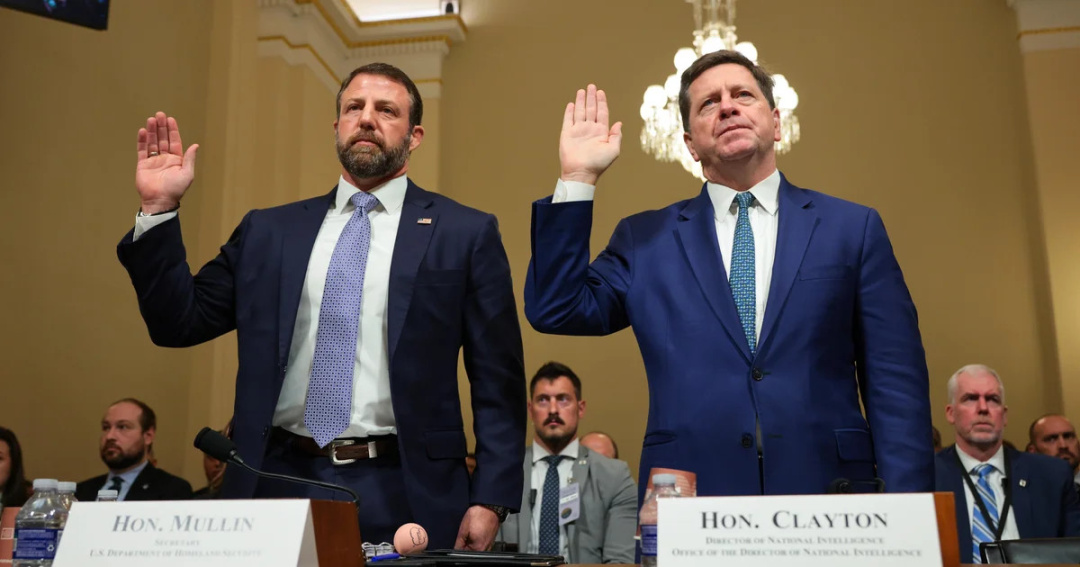
Top U.S. national security officials recently testified before Congress, stating that there is no evidence linking a series of technology outages affecting airlines, banks, and Microsoft services to malicious cyberattacks. During a House Homeland Security Committee hearing, officials including Homeland Security Secretary Markwayne Mullin and Director of National Intelligence Jay Clayton sought to reassure lawmakers concerned about the outages, particularly one at the National Security Agency (NSA).
Mullin emphasized that the Department of Homeland Security (DHS) had reached out to private industry to review the outages. Clayton echoed this sentiment, stating that intelligence officials had assessed the incidents in collaboration with government agencies and cybersecurity experts, concluding that these outages were due to maintenance and technical changes rather than coordinated attacks.
FBI Deputy Director Christopher Raia confirmed that the FBI had been involved in examining the incidents from the outset, asserting that there was no indication of cyber malicious activity related to the outages. He noted that the FBI would continue to work with private-sector partners to ensure safety.
During the hearing, Rep. Dan Goldman pressed Clayton for clarity regarding the NSA outage, questioning whether it was caused by internal software updates or external interference. Clayton reiterated that there was no evidence of outside threats, describing the outages as routine maintenance procedures that sometimes require systems to be taken offline.
Lawmakers Address Iranian Threat Concerns
As discussions continued, lawmakers raised concerns about potential Iranian threats, including the possibility of sleeper cells operating within the U.S. Mullin acknowledged the seriousness of these concerns, stating that DHS personnel are actively working with intelligence and Justice Department officials to identify and mitigate threats.
Case Closed
Clayton highlighted the risks posed by online radicalization, noting that foreign extremist networks could influence individuals within the U.S. Raia cautioned that while intelligence reports may indicate potential plots, they do not necessarily mean that attackers have the capability to execute them. He emphasized that authorities take these threats seriously, despite the aspirational nature of some reports.
The officials did not confirm any operational plans related to Iranian sleeper cells or the use of radiological weapons, but Clayton acknowledged that Iranian threats have significantly increased both domestically and abroad. He reaffirmed the commitment to detecting and combating these threats, underscoring the need for vigilance in the face of evolving technological challenges.