Naftali Bennett Meets Netanyahu for Security Briefing in Knesset

Beyachad party chairman MK Naftali Bennett visited Prime Minister Benjamin Netanyahu's Knesset office for a meeting described by the Likud party as a security briefing. This meeting took place at a politically sensitive moment, just prior to a scheduled meeting of opposition bloc leaders, amid ongoing discussions about the formation of a new government.
The head of the National Security Council joined the meeting shortly after it began. The Likud party confirmed that Netanyahu and Bennett were engaged in discussions regarding national security matters. However, Bennett's office has not disclosed specific details about the topics discussed during the meeting.
Bennett has been advocating for the establishment of a Zionist unity government that would include only Zionist parties, excluding Arab parties. A key condition for this proposal is the advancement of conscription for haredim into the Israel Defense Forces, a contentious issue among various political factions.
Motivations Behind Bennett's Strategic Meeting
Journalist Yanir Cozin has suggested several possible motivations for Bennett's meeting with Netanyahu. One theory posits that Bennett may be considering the formation of a national unity government under Netanyahu's leadership, which could help him regain support among right-wing voters and potentially position him for future leadership within the right-wing camp.
Case Closed
Alternatively, Bennett might not intend to join a government led by Netanyahu but instead aims to show the public that he has made efforts to promote a unity government. Cozin also noted Bennett's previous negotiations with Likud in 2021, which ultimately led to his forming a government with parties opposed to Netanyahu.
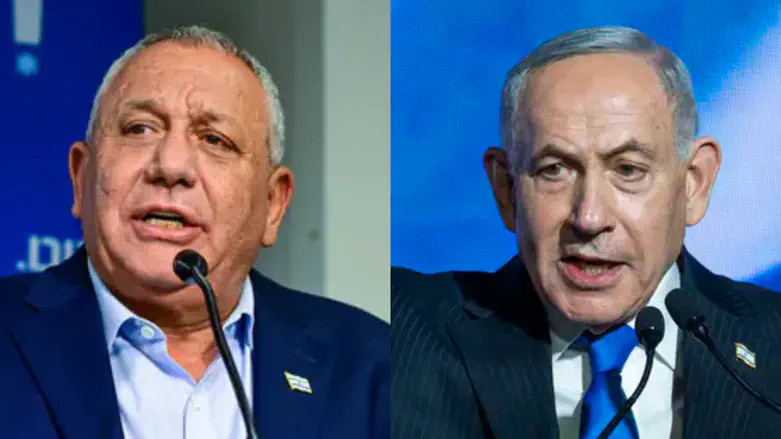
Another angle raised by Cozin is that the meeting could serve as a signal to opposition leaders Gadi Eisenkot and Yair Lapid that Bennett has other political options, emphasizing the need for his positions to be considered in government formation negotiations. Additionally, Bennett may present Netanyahu with a unity government proposal that includes conditions difficult for the prime minister to accept, such as a rotation agreement where Bennett would serve as prime minister first for two years. If Netanyahu were to reject this proposal, Bennett could portray himself as having genuinely attempted to achieve political unity.