Apple Services Disrupted Amid NSA Outage and Equinor Cyberattack
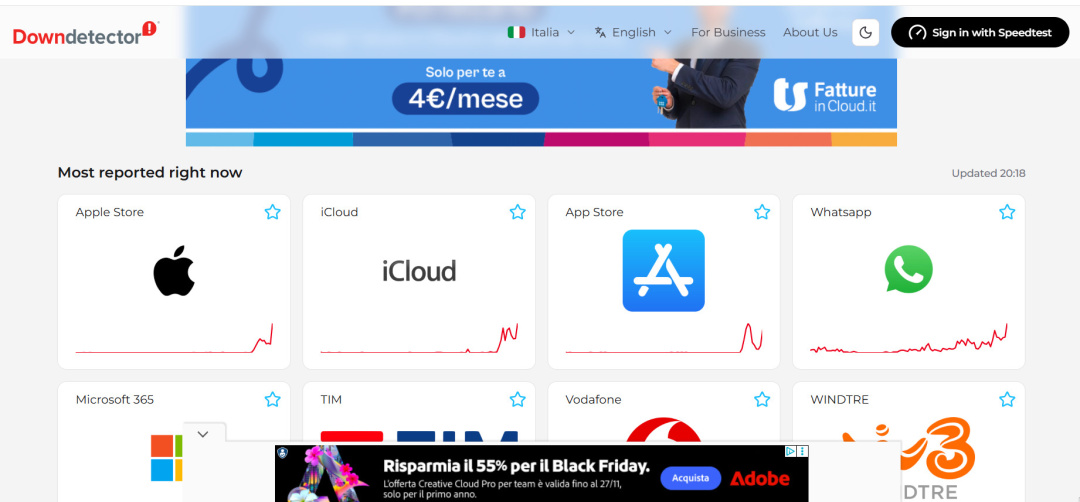
On November 17, Apple customers faced widespread service disruptions that impacted iCloud, the App Store, Apple Music, and AppleCare on Device. These issues arose during a week marked by technical failures across various major technology companies, banking services, and U.S. government networks. Concurrently, Norwegian energy company Equinor disclosed a cyberattack targeting some of its IT systems.
Apple's System Status page indicated problems with iCloud Account and Sign In, affecting users' ability to access their Apple accounts and causing repeated requests for Apple ID passwords. Some customers reported difficulties activating new iPhones, suggesting that the disruption impacted essential account services rather than just individual applications.
According to reports, the problems also extended to the App Store and Apple Music. At the time of publication, Apple had not provided a detailed public explanation, only noting the incidents on its status page. The company stated that the disruptions were caused by an internal update, asserting that many systems were back online shortly after the issues arose.
The Apple outage drew attention as it followed several other significant disruptions, including a widespread failure at Microsoft that affected Outlook and Teams, as well as online banking issues reported by JPMorgan Chase. Notably, a separate outage also impacted the National Security Agency's classified internal communications network, known as NSANet. This incident raised particular concerns due to the sensitive nature of the network, although reports indicated that there was no evidence suggesting the NSA outage was the result of a cyberattack. It was noted that a system patch was being implemented prior to the disruption.
The increasing frequency of outages does not imply that they share a common cause or are part of a coordinated cyber campaign. Various factors, including technical problems, software bugs, configuration errors, and infrastructure failures, can disrupt major services without any malicious intent. Claims regarding AI-powered attacks should be substantiated with evidence.
Equinor Confirms Cyberattack Details
On the same day, Equinor confirmed a cyberattack on its IT systems but reported that operations and production were not affected, and there was no evidence of data theft. The company activated its response teams and notified relevant authorities, stating that there were no signs of stolen data.
While the Equinor incident confirmed a cyberattack, it is crucial to differentiate it from the outages affecting Apple and the NSA, for which no malicious activity has been established. Cyberattacks can compromise systems and data, while ordinary technical failures can disrupt essential services relied upon by businesses and the public. Both scenarios necessitate effective incident response and clear communication to maintain operations during technological failures.
Clearance Granted
Currently, there is no evidence linking the recent outages affecting Apple, Microsoft, the NSA, banks, and aviation systems. It is essential not to interpret every major service disruption as indicative of a cyberattack. As reported regarding the NSA incident, there was no evidence suggesting that the disruption stemmed from a cyberattack.
This distinction is significant. In an era marked by heightened cyber threats and an increasing reliance on digital services, organizations must conduct thorough investigations into incidents, communicate transparently, and avoid conflating coincidence with attribution. A technical outage does not necessarily equate to a cyberattack, but it can reveal serious vulnerabilities in the systems that society depends on.