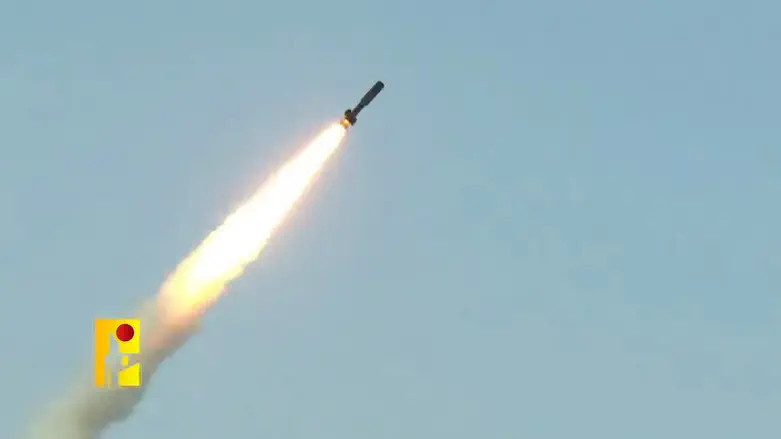
Hezbollah's Role in Potential Conflict with Iran Raises Concerns
Israel's Military Intelligence Directorate has expressed growing concerns that Hezbollah could become involved in a renewed conflict against Israel if hostilities with Iran resume. In an interview with Arutz Sheva, Moran Alalouf, a researcher at the Israel Defense and Security Forum (IDSF), discussed the factors that may lead Hezbollah to enter the fray. Alalouf emphasized that Hezbollah operates as a terrorist organization aligned with Iranian interests, suggesting that it would likely defend Iran in the event of an attack on its nuclear facilities.
Alalouf noted that despite international sanctions impacting Iran's economy, the regime has managed to maintain a financial network that supports its operations. She reported that Iran has recently transferred approximately half a billion dollars to Hezbollah, bolstering the group's military capabilities. Within Hezbollah, there are differing opinions on whether to commit to a confrontation with Israel, with some factions believing intervention is necessary if Iran faces an existential threat.
The nature of any future Israeli military actions against Iran will significantly influence Hezbollah's decision-making. Alalouf raised questions about whether Israel's approach would involve targeted strikes on nuclear and missile production facilities or a broader campaign aimed at dismantling the Iranian regime's infrastructure. Such a scenario could compel Hezbollah to take action.
Hezbollah is currently navigating complex pressures, as the Lebanese government seeks to assert control and limit the organization's influence. However, Iran expects Hezbollah to support its interests in exchange for continued financial and military assistance. Alalouf indicated that if a large-scale conflict were to arise, Hezbollah would likely feel compelled to participate.
Despite suffering significant losses in previous confrontations, Hezbollah retains substantial military capabilities, including at least 10,000 short-range missiles and long-range missiles capable of reaching central Israel. Alalouf also highlighted the emerging threat posed by fiber-optic-controlled drones, which could be deployed over increasing distances.
Hezbollah's Growing Threat in Southern Lebanon
The situation in southern Lebanon remains precarious, with Hezbollah reportedly re-establishing its presence in areas previously controlled by the Lebanese army. Alalouf warned that Hezbollah operatives are actively gathering intelligence and preparing for potential cross-border incursions, indicating a readiness for future conflict.
Alalouf cautioned against underestimating Hezbollah, despite its weakened state following recent confrontations. She emphasized that the organization possesses both the means and intent to engage in hostilities against Israel. The ongoing support from Iran ensures that Hezbollah remains a formidable threat, with ambitions that have not diminished.
Filed & Cleared
In her assessment, Alalouf argued that Israel's strategy must evolve beyond mere military strikes. She suggested that a comprehensive approach is necessary to address Hezbollah's political influence in Lebanon and to disrupt its operations globally. The IDF's ongoing presence in southern Lebanon is crucial, but Alalouf stressed the importance of addressing the political dynamics that allow Hezbollah to maintain its power.
Alalouf concluded that humanitarian efforts in southern Lebanon cannot proceed while Hezbollah remains entrenched in the region. The need for a coordinated response to the threat posed by Hezbollah and its Iranian backers is more pressing than ever, as the potential for renewed conflict looms on the horizon.