Civilian Oversight of Special Operations Forces Could Get $45 Million Budget
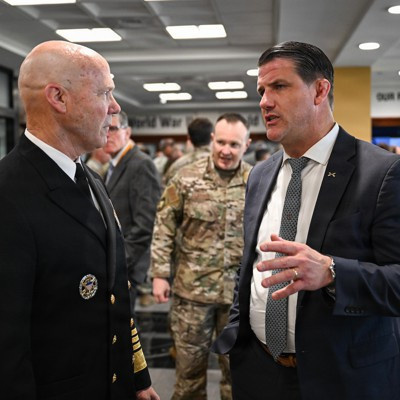
Defense Secretary Pete Hegseth is advocating for a significant elevation of the civilian special operations chief's role, alongside a proposed budget of $45 million and the allocation of 100 staff members to support this initiative. This move is part of a broader strategy to normalize the administration of special operations forces, placing it on an equivalent level with military services.
The success of these proposed changes hinges on Congressional support, particularly as Hegseth's department has faced repeated clashes with the Republican-controlled legislature. With Democrats set to take the majority in January, the potential for further conflict looms.
In a memo dated November 2, Hegseth outlined a new framework for the chief role, suggesting a title change from assistant secretary of defense for special operations/low-intensity conflict to an under secretary position. Additionally, he proposed reviving the historic Office of Strategic Services name, a nod to the World War II organization that originally managed U.S. special operations units.
Hegseth emphasized the critical role of special operations forces (SOF) in the current era of global uncertainty and strategic competition, noting that despite their contributions, SOF has historically faced resource limitations compared to other military branches. He stated, "It is time for a bold, foundational change."
This memo fulfills a requirement from the 2025 National Defense Authorization Act, which mandated a plan to resource the assistant secretary of defense for special operations/low-intensity conflict (ASD SO/LIC) to ensure it can operate with the same authority as military departments. However, experts warn that these changes must be codified in law to be effective.
Michael Lumpkin, a former official in the office during the Obama administration, expressed concerns that while the name change to OSS is a positive nod to history, it could lead to an ambiguous structure that dilutes oversight of U.S. Special Operations Command (USSOCOM). He noted that the civilian oversight of USSOCOM needs to reflect its unique responsibilities, combining combatant command duties with service-like functions.
Advocating for Stronger Civilian Oversight
The push for enhanced civilian oversight has been a topic of discussion among special operations experts for years. They argue that giving ASD SO/LIC a standing comparable to military department secretariats would improve its involvement in budget, acquisition, personnel, and readiness decisions.
This initiative has been in development since the 2017 National Defense Authorization Act, which granted ASD SO/LIC its initial authorities over the management of special operations forces. However, past efforts have faced bureaucratic resistance, with necessary resources and support often delayed or unfulfilled.
In 2020, acting Defense Secretary Chris Miller reorganized the position to report directly to his office, elevating its status to be on par with the secretaries of the Army, Navy, and Air Force. Hegseth's recent efforts further this initiative by rebranding the position and office, authorizing the title of Assistant Secretary of War for the Office of Strategic Services, pending Congressional approval.
Filed & Cleared
The proposed office will have a budget of at least $45 million, including 75 civilian positions and 25 military personnel, along with dedicated space in the Pentagon. Experts stress that effective civilian oversight requires adequate staffing and expertise to assess needs, scrutinize investments, and ensure accountability within the special operations enterprise.
However, for Hegseth's directives to be taken seriously, Congressional backing is essential. Lumpkin remarked that this directive represents the initial step in negotiations with lawmakers, emphasizing the importance of specific legislative language to achieve the desired outcomes, as Congress cannot legislate cultural changes within the Pentagon.