Cursor Data Breach Linked to Stolen Fireworks AI Access Key
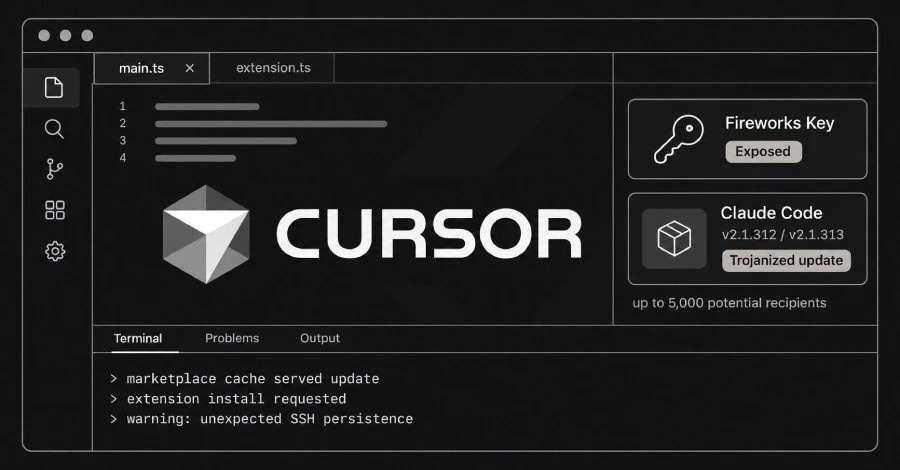
The recent compromise of Cursor's extension marketplace has been linked to the theft of an access key from Fireworks AI. This breach allowed an attacker to access sensitive data and distribute a trojanized version of Anthropic's Claude Code extension. According to Cursor, the attacker obtained the access key that was inadvertently exposed by Fireworks AI, which facilitated unauthorized access to a read-only storage bucket containing limited coding agent traces.
Cursor reported that the compromised data included traces from sessions that were not in Privacy Mode, a setting that allows users to opt out of their data being used for training purposes. The traces, dating back to 2025, contained unedited credentials, which exposed the API credentials of a small fraction of customers. The attacker utilized these credentials to gain access to various software-as-a-service tools used by Cursor.
In response to the breach, Cursor took immediate action by deactivating the vendor's key, revoking and rotating credentials, and searching for signs of further unauthorized access. The company also temporarily disabled some internal and product services, which disrupted access to certain features for users. The breach escalated on October 29, 2026, when the attacker used a stolen credential to place the trojanized version of the Claude Code extension on the marketplace's cache.
User Impact from the Malicious Extension
Cursor indicated that up to 5,000 users who downloaded specific cached versions of the extension during the exposure window may have received the malicious build. The compromised extension was available for approximately 11 hours before it was removed. Following the incident, Cursor notified affected users and assisted them in revoking exposed credentials. The company has since moved all inference traffic off Fireworks AI and cut off access to shared datasets.
Filed & Cleared
Cursor emphasized that no additional malicious activity has been detected since November 1, 2026, and there is no evidence that the incident impacted users who had enabled Privacy Mode or affected Cursor's production environment. This incident comes amid a broader context of cybersecurity concerns, as Uber recently confirmed a separate breach involving the theft of drivers' license information linked to compromised internal credentials from Fireworks AI.
As the cybersecurity landscape continues to evolve, incidents like these highlight the importance of robust security measures and the need for vigilance in protecting sensitive data.