SilentAir Exploits Asian Telecom Networks for SMS Interception
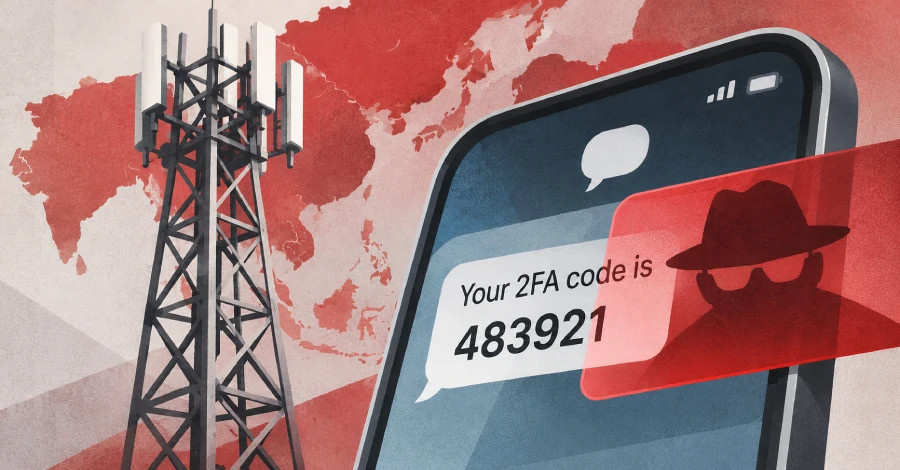
A newly identified espionage group, known as SilentAir, has been exploiting hacked equipment within Asian mobile operators to intercept calls and text messages of selected individuals, with a significant focus on users in Taiwan. This revelation comes from Enea, a Stockholm-based telecom and cybersecurity software company, which discovered the group's attack sources across at least six Asian countries. Enea has classified SilentAir as a state-level actor, although it has only low confidence in linking its activities directly to China.
Enea has informed the affected operators about the locations of SilentAir's sources, noting that while the group's operations have been disrupted for the time being, there is a possibility of their return. The report does not clarify whether the operators have successfully removed the compromised equipment from their networks.
SilentAir's attacks utilize the SS7 and Diameter protocols, which are essential for routing calls and texts and enabling roaming services. These communications traverse a shared network known as the IPX, which relies on a high level of trust between operators. By sending an UpdateLocation message or its Diameter equivalent to the target's home network, SilentAir could claim that the hacked equipment was now serving the target's phone. If the home network accepted this message, calls and texts intended for that individual would be redirected to the attackers.
Some of these interception attempts were successful, with Enea observing that two-factor authentication (2FA) codes were intercepted shortly after the diversion took effect. This suggests that the group may have been attempting to gain unauthorized access to various accounts linked to the targeted individuals. However, the report does not provide evidence of voice call interceptions or confirm whether any accounts were successfully compromised.
The report indicates that interception constituted 18.3% of the attacks attributed to SilentAir, a stark contrast to the 2.1% observed in typical surveillance operations. Among the targets were political and government VIPs within their respective countries. In some instances, equipment from multiple countries collaborated against specific targets, suggesting centralized control over the operations.
Beyond Taiwan, targets included individuals in other Southeast and East Asian networks, as well as sporadic targets in East Africa, Central Asia, the Middle East, and Europe. The report notes that users of the compromised operators' networks may also have been at risk, although Enea could not directly observe that traffic.
Enea identified SilentAir by analyzing unusual attacks on the links between operators, tracking suspicious activity primarily over SS7 and occasionally Diameter since early 2025. The analysis revealed that the networks hosting SilentAir displayed abnormal behavior in handling follow-up messages for diverted targets, leading to the conclusion that either external actors were impersonating the networks or that internal equipment had been compromised.
The company confirmed the latter when it detected equipment within one operator both sending and receiving attack commands, mirroring the behavior of SilentAir sources in other networks. Initially, detecting and blocking these attacks proved challenging due to the attackers' deep understanding of mobile networks and signaling defenses. After containing the attacks, Enea managed to recover traces of unauthorized access, although it could not analyze the malware believed to be used by SilentAir.
Silent SMS Tactics and Their Implications
The report refrains from naming the countries, operators, or specific targets involved. In some regions, SilentAir's attacks originated from multiple operators. The group also employed silent SMS messages, primarily sent at night, targeting individuals in Taiwan. The purpose of these messages remains unconfirmed, but they may have served as a method to verify that previous diversions were still active, as phones are less likely to re-register to their actual locations during nighttime.
The silent messages often contained spam-like motivational or promotional content, typically in English, which Enea suspects was a disguise. If an operator along the way stripped the silent setting from a message, the recipient would perceive it as spam and likely ignore it.
The group's tracking and interception activities appeared to follow a workday schedule in UTC+8, aligning with China Standard Time, beginning at 9 a.m. and tapering off on weekends and during Chinese holidays. Enea also considered a potential link between SilentAir and Liminal Panda, a group previously associated with telecom intrusions. While the report suggests a possible connection, it does not definitively tie the two groups together.
In various compromised operators, SilentAir's attacks coincided with known Liminal Panda infections, although there were instances where no collaboration was evident. Both groups targeted operators within the same region of Asia, but Liminal Panda has not shown a specific focus on Taiwan.
SilentAir's operational behavior also shares similarities with SCTPE, a lesser-known Linux trojan designed to handle SS7 and Diameter traffic. Singapore's Infocomm Media Development Authority has described this tool in a government advisory, referring to it as SIGweaver. CrowdStrike identified it on January 21 and linked it to Liminal Panda with moderate confidence. However, Enea noted that SilentAir responded to messages it had not initiated, a capability that SCTPE does not possess, indicating a higher level of operational security.
Cleared to File
Enea's GTP firewall has detected Liminal Panda activity across several customer operators since the beginning of the year, successfully blocking GTPDoor traffic associated with the group. Evidence of Liminal Panda infections or strong indicators of such infections have been observed in at least five to ten operators. The GTPDoor backdoor, first documented on February 27, 2024, conceals commands within GTP-C, the protocol that establishes mobile data connections between networks. Enea also identified a new version that hides commands in GTP-U, which carries user data and is more challenging to inspect, although it is believed to serve mainly as a backup.
Enea cautioned that any attacker could potentially reuse these techniques and advised operators to remain vigilant. The report does not provide specific recommendations for individuals whose calls and texts may be at risk.