Rumors of Ahmadinejad's Alleged Mossad Recruitment Surface
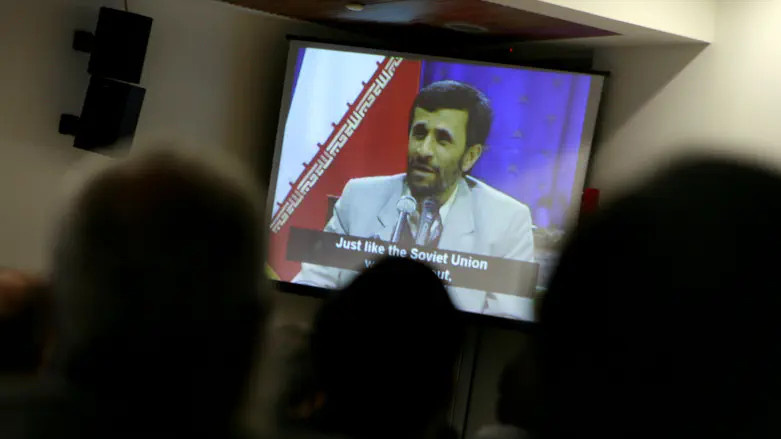
Reports claiming that Mahmoud Ahmadinejad, the former president of Iran, has been recruited by the Mossad remain unverified and lack a clear source. The notion of recruiting a leader from an adversarial state for Israeli intelligence purposes brings to mind historical instances, particularly the case of Husni al-Za'im, who served as Syria's president for a mere 137 days in 1949. Lt. Col. (res.) Gideon Mitchenik, an intelligence and heritage researcher, expresses skepticism about both Ahmadinejad's alleged recruitment and the historical account of al-Za'im's interactions with Israeli intelligence.
In 1949, following the War of Independence, Israel engaged in complex negotiations with Syria, which were marked by significant challenges. During this time, al-Za'im led a military coup and adopted a hostile policy towards Israel, yet he maintained clandestine communications with Israeli officials. Mitchenik explains that these contacts began even before the establishment of Israel, facilitated by members of the Jewish Agency’s Political Department, which was then led by Moshe Sharett.
The Political Department aimed to foster relationships with Arab leaders, including King Abdullah of Jordan, in hopes of reaching understandings that could lead to peace. Amidst this backdrop, David Ben-Gurion, the head of the Jewish Agency, was informed of a British-Iraqi plan to seize control of Syrian territory. In response, he sent an intermediary to alert the Syrians, which set the stage for future conflicts.
Al-Za'im's coup in early 1949 marked a turning point, as he adopted an aggressive stance towards Israel while simultaneously engaging in secret discussions with Israeli representatives, including Tuvia Arazi. Al-Za'im expressed a willingness to consider a peace agreement and even to absorb Palestinian refugees into Syria. However, his connections to American officials raised concerns about his reliability.
Ben-Gurion was cautious about fully trusting al-Za'im, fearing that his ties to the U.S. could complicate matters. Mitchenik highlights that the details of these covert interactions were later revealed by Prof. Itamar Rabinovich, who examined archival materials. This historical context illustrates that while there were diplomatic and intelligence-related dialogues with al-Za'im, they did not amount to espionage in the traditional sense, similar to Israel's secret negotiations with other Arab leaders during that era.