France Attributes Cyberattack on Retail Refrigeration to Iran's IRGC
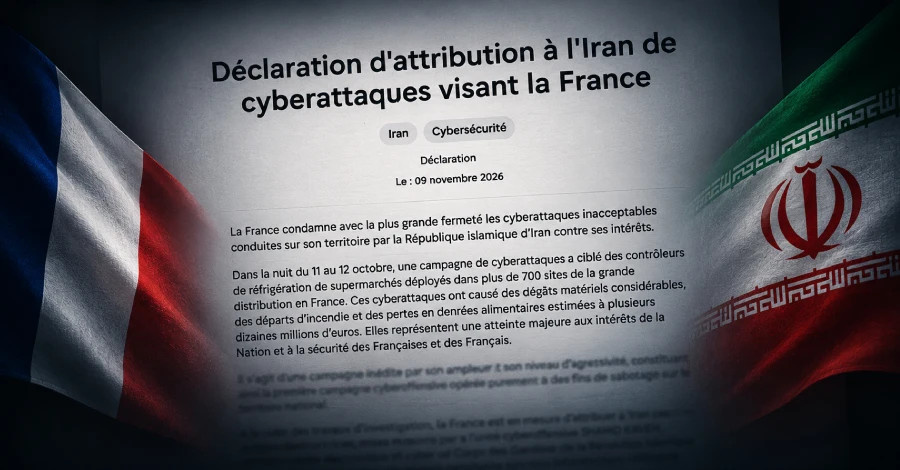
In a significant development, the French government has reported that a cyberattack on refrigeration controllers at around 700 retail sites was executed by a cyber unit of Iran's Islamic Revolutionary Guard Corps (IRGC). This attack took place on the night of October 11, when the attackers manipulated the defrost settings of the controllers, leading to high temperatures that caused food spoilage and, in at least 15 instances, fires.
The cyber unit responsible for this attack is identified as Shahid Kaveh, which has gained notoriety through various hacktivist personas, including CyberAveng3rs and Cyber Isnaad Front. France's Foreign Ministry has announced plans to summon the Iranian ambassador and is seeking support from European partners to impose new sanctions against Iranian entities involved in this incident.
Following the attack, the Paris prosecutor's office has opened a judicial investigation targeting the unit's leadership and others involved. The investigation focuses on charges of illegally interfering with computer systems and causing damage that endangers public safety, with the added severity of serving a foreign power, namely Iran.
The attackers gained remote access to Danfoss and Dixell refrigeration controllers via web interfaces, initiating abnormal defrost cycles without time limits and disabling safety alerts for temperature probes. This breach resulted in approximately 20 fires across various sites, primarily affecting large retailers such as Casino, Leclerc, Coopérative U, Metro, Carrefour, and Intermarché, as well as smaller businesses like butcher shops and cooperative food plants.
Linking Attacks to Broader Cyber Threats
Additionally, the attack has been linked to simultaneous targeting of Schneider Electric equipment at small hydroelectric installations in France, although the impact on that equipment was reported to be moderate. The French government's attribution of the attack to the IRGC is based on several indicators, including the infrastructure used during the attack, which was also employed for reconnaissance of Schneider Electric equipment.
The investigation has revealed that the attack method is characteristic of the Shahid Kaveh unit, with evidence of Persian language usage and IP addresses traced back to devices located in Iran. This unit has previously claimed responsibility for attacks on industrial equipment, including a notable campaign against Israeli interests.
Intelligence Reviewed
As the investigation continues, France's national cybersecurity agency, along with other security services, is closely monitoring the situation. The cyber crisis coordination center, known as C4, has indicated that the food losses from this attack are estimated to be in the tens of millions of euros, marking it as the first offensive cyber campaign on French soil aimed purely at sabotage.
In light of these events, France's CERT-FR has issued alerts regarding ongoing compromises affecting remote refrigeration controllers, warning that the exposure of management interfaces to the internet poses significant risks. The alert emphasizes the importance of security measures to prevent future incidents, particularly for devices that are no longer receiving security updates.