Greece Establishes Space Operations Command to Enhance Military Capabilities
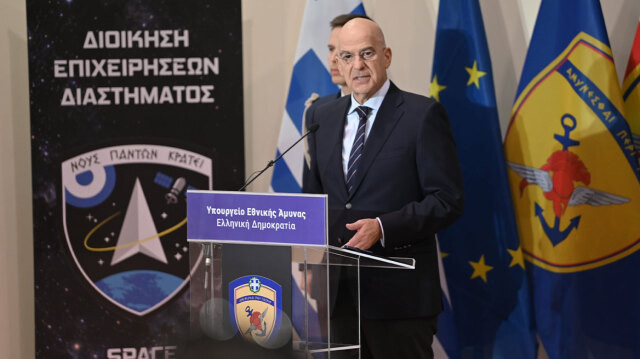
Defence Minister Nikos Dendias inaugurated the Space Operations Command at Dekeleia Air Base, marking a pivotal transition for the Greek Armed Forces into a new era of satellite-enabled operations. During the ceremony, Dendias was briefed on the Command's mission and toured its facilities, where he observed a demonstration of the Space Operations Centre.
The mission of the Space Operations Command focuses on the systematic integration of satellite capabilities into the operational planning and execution of military operations. Dendias highlighted the necessity for Greece to own its satellite intelligence, ensuring timely access at all levels of military operations.
This initiative is part of the "Agenda 2030" framework, which aims to enhance the Armed Forces' space architecture by strengthening existing capabilities and acquiring new ones. The vision is for Greece to emerge as a significant player in space operations while safeguarding its national interests.
Dendias noted that the establishment of the Space Operations Command represents a substantial step towards adapting the Armed Forces to modern joint, multi-domain operations. He pointed out that space has become a critical dimension of military strategy, referencing the impact of lost satellite capabilities on Ukrainian communications during recent conflicts.
Strengthening Greece's Military Communication Framework
The Command's creation addresses a significant gap in Greece's military capabilities, which have previously relied on foreign satellite services. Dendias stressed that the transition from the old C4I model to the new C5 ISRT architecture is essential for integrating command, control, computing, communications, cyber, intelligence, surveillance, reconnaissance, and targeting into a cohesive operational framework.
The new system will ensure that information from satellites and various sensors is accessible to all branches of the Armed Forces, enhancing operational awareness and responsiveness. Dendias emphasized the importance of developing a national military satellite communications system to maintain control over critical military communications, particularly in times of crisis.
Approved for Dissemination
As part of this initiative, Greece has already acquired 16 dual-use optical low-Earth-orbit satellites and plans to develop additional optical observation satellites, signals intelligence satellites, and synthetic aperture radar satellites. The establishment of a domestic technological base for satellite maintenance and development is also a key component of this strategy, ensuring that Greece can independently manage its space capabilities.
The inauguration ceremony was attended by high-ranking military officials and representatives from various branches of the Armed Forces, underscoring the significance of this development for Greece's national security and military strategy.