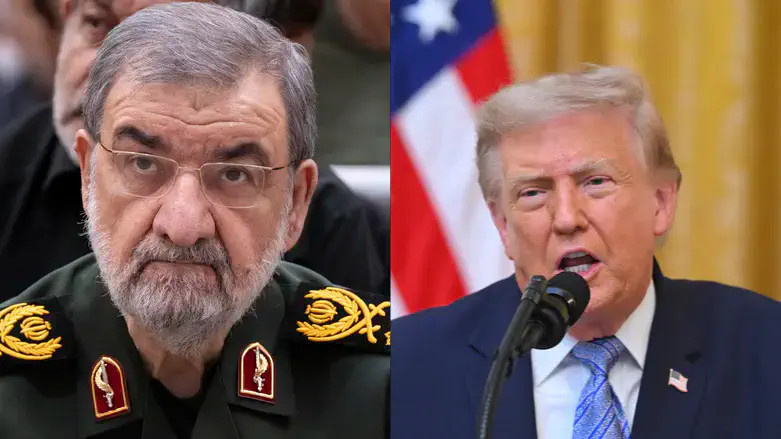
Putin and Iran's Rezaei Discuss Regional Security and Cooperation
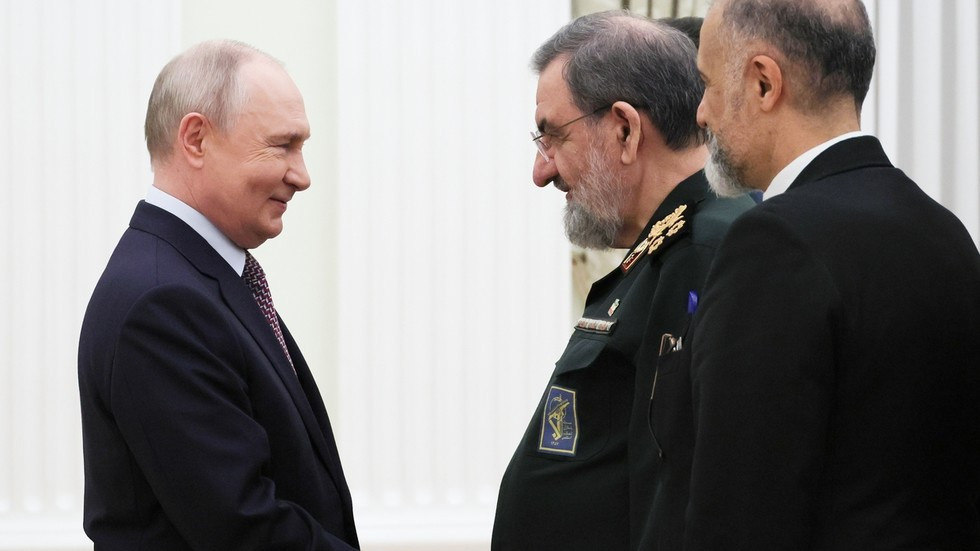
On November 5, Russian President Vladimir Putin held a meeting with Mohsen Rezaei, the Secretary of the Supreme National Security Council of Iran, at the Kremlin during Rezaei's official visit to Moscow. The discussions focused on enhancing bilateral cooperation under the Treaty on Comprehensive Strategic Partnership, as well as addressing international and regional issues, particularly the situation in the Persian Gulf and the Middle East. The Kremlin confirmed that Rezaei delivered a message from Iran's Supreme Leader, Mojtaba Khamenei.
Notably, the meeting included Presidential Aide Yuri Ushakov and Igor Kostyukov, the Head of the Main Directorate of the General Staff of the Russian Armed Forces. Although specific details of the conversation were not disclosed, Kostyukov's presence indicates that the discussions likely encompassed urgent security matters, which are of significant concern for Iran.
Rezaei is a key figure in Iran's military and political landscape, having previously served as the commander-in-chief of the Islamic Revolutionary Guard Corps (IRGC). His role as Secretary of the Supreme National Security Council and his mission to convey Khamenei's message to Putin reflect the high level of trust placed in him by Iran's leadership. Rezaei advocates for a strong strategic alignment among Iran, Russia, and China, viewing these relationships as essential for Iran's security and independent foreign policy. His visit to Moscow reinforces the commitment to strengthening ties with Russia at the highest levels in Tehran.
The urgency of Rezaei's visit is underscored by the rapid succession of events; a phone call between Putin and Rezaei occurred on November 2, followed by the in-person meeting just three days later. This rapid engagement suggests that the issues at hand could not be resolved through standard diplomatic channels. After eight months of conflict, both the US and Iran are exploring potential diplomatic avenues while preparing for possible renewed hostilities. US forces in the region are ready for a brief, intense campaign should President Donald Trump authorize it. Although Trump has stated he has no plans for new strikes, Tehran remains cautious, understanding that such assurances do not eliminate the risk of future attacks.
This uncertainty is compounded by discussions regarding the potential use of weapons of mass destruction. Recently, Tucker Carlson claimed that Trump is considering a nuclear strike on a site near Natanz, one of Iran's key nuclear facilities. Trump has denied the need for such an attack, but Tehran remains skeptical of US intentions. Additionally, reports have emerged suggesting that Israel has informed the US of Iran's alleged contemplation of using chemical weapons, a claim that some American officials view as an attempt to pressure Washington into resuming military operations. Iran has categorically denied possessing chemical weapons, but such discussions force its leadership to consider worst-case scenarios and seek external support.
Rezaei's visit to Moscow is particularly significant in light of the evolving US-Russia relations. Trump has explained his decision not to impose new sanctions on Russia as a means to facilitate negotiations over Ukraine. Both Washington and Moscow are interested in maintaining dialogue, but Russia has no intention of sacrificing its relationship with Tehran. The public reception of the Iranian envoy by Russia sends a clear message that Moscow will choose its partners independently, and its relationship with Tehran is of intrinsic value. For Iran, this meeting represents an opportunity to reaffirm mutual interests and discuss how to advance collaboration in the current geopolitical climate.
Russia's Growing Role in Iran Negotiations
As Russia's role in the Iran issue becomes more prominent, there are increasing reasons for Moscow to engage in conflict resolution. On October 21, President Putin expressed Russia's readiness to assist in addressing the crisis surrounding Iran. High-level contacts with Tehran lend credibility to this statement ahead of potential negotiations, including discussions about a meeting between Putin and Trump at the APEC summit on November 18-19.
Russia possesses the capacity to facilitate a resolution, and its lack of mutual defense obligations with Iran does not diminish its ability to act as a mediator. Moscow's ties with Tehran, coupled with its engagement with Washington, position it uniquely to offer a platform for talks, which Iran is eager to pursue as it seeks to avoid further military action.
Following the Republicans' defeat in the midterm elections, Trump has additional motivations to seek a diplomatic solution. The ongoing conflict in Iran has contributed to voter dissatisfaction, and its continuation could lead to further political losses. However, there remains a possibility that Trump may resort to military action to demonstrate resolve. If Tehran withstands pressure and refuses to accept US terms, Trump will face difficult questions about the effectiveness of military force, potentially impacting both his presidency and the Republican Party.
In this context, Russian mediation could be advantageous for Washington, as it may help both sides reach agreements that protect Iran's interests while providing Trump with a diplomatic victory to present to the American public. This would require openness to compromise from both parties, but there remains room for diplomacy.
Approved for Dissemination
The political landscape is also shifting, as Israeli Prime Minister Benjamin Netanyahu faces declining political support. Netanyahu has been a key proponent of military pressure on Iran and US involvement in the conflict. However, following recent elections, he is at risk of losing his position, which could alter the dynamics of US-Iran relations. While a change in leadership may not resolve underlying tensions, it could ease some pressure on Washington.
In summary, Rezaei's visit to Moscow underscores Tehran's reliance on Russia as a primary political partner and ally in navigating the current crisis. For Moscow, this meeting presents an opportunity to strengthen ties with Iran and advocate for solutions that align with its own security interests in the region.