Buick 401 Nailhead Engine's Role in SR-71 Blackbird Launch
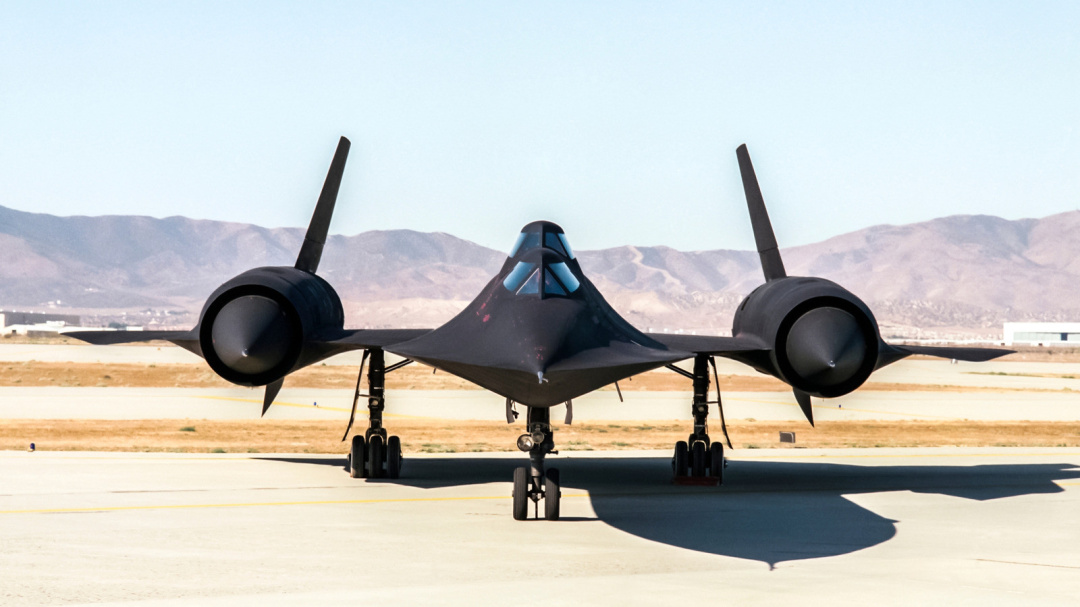
The Lockheed SR-71 Blackbird, a renowned spy plane, is capable of reaching speeds of 2,193.2 mph and flying at altitudes exceeding 85,000 feet. To achieve such remarkable performance, the aircraft is equipped with two Pratt & Whitney J58 turbojet engines that generate a combined thrust of 50,000 pounds. However, starting these powerful engines was not a straightforward task, which is where the Buick 401 Nailhead engine came into play. While it did not directly power the Blackbird, it was essential for initiating its flight operations.
Turbojet engines require a significant amount of airflow to ignite the fuel properly, and they must reach a certain speed to sustain combustion. Therefore, these engines need to be spun up before they can operate independently. Given their substantial weight of around 6,000 pounds each, a conventional electric starter, like those found in standard vehicles, would not suffice. Instead, the Air Force utilized a pair of Buick 401 Nailhead engines to provide the necessary power to start the Blackbird's turbines.
The Buick 401 Nailhead engine, with a displacement of 401 cubic inches, produced 325 horsepower and 445 pound-feet of torque. The Air Force employed two of these engines on the Blackbird's original start cart, connecting them with a 12-inch-wide belt that linked their transmissions. This setup allowed the combined output to be transmitted to the turbojets, enabling them to reach their operational speed. Once the turbines were spinning, the pilot could ignite the engines, allowing the Blackbird to operate autonomously.
The Nailhead engine, named for its distinctive vertically oriented valves resembling nailheads, first appeared in 1953 with a displacement of 322 cubic inches. Over the years, Buick increased the engine's displacement, culminating in the 401 version that gained popularity in various Buick models, including the 1959 Invicta and Electra. The Invicta model even adopted the nickname Wildcat 445 due to its impressive torque rating.
Legacy of the Nailhead in Muscle Cars
The 401 Nailhead engine also powered the iconic first-generation Buick Riviera in 1963 and the Skylark Gran Sport in 1965, marking Buick's foray into the muscle car market. Despite the engine's production ending in the mid-1960s, its legacy continued through its use in the Blackbird.
Case Closed
After approximately a decade of service on the start cart, the Nailhead engines were retired in the 1970s and replaced by two 454-cubic-inch big-block LS7 V8 engines, which were originally designed for the 1970 Chevrolet Corvette. Although these engines never entered regular production, the Air Force acquired a pair for use in the Blackbird.
In the 1980s, the Air Force transitioned to pneumatic starters, a technology that had been in existence for decades. These starters operate by forcing high-pressure air through the turbine blades, effectively spinning them up without a direct mechanical connection. The Blackbird relied on this method until its retirement in the 1990s.