Hungary's Release of Communist-Era Security Archives Sparks Controversy
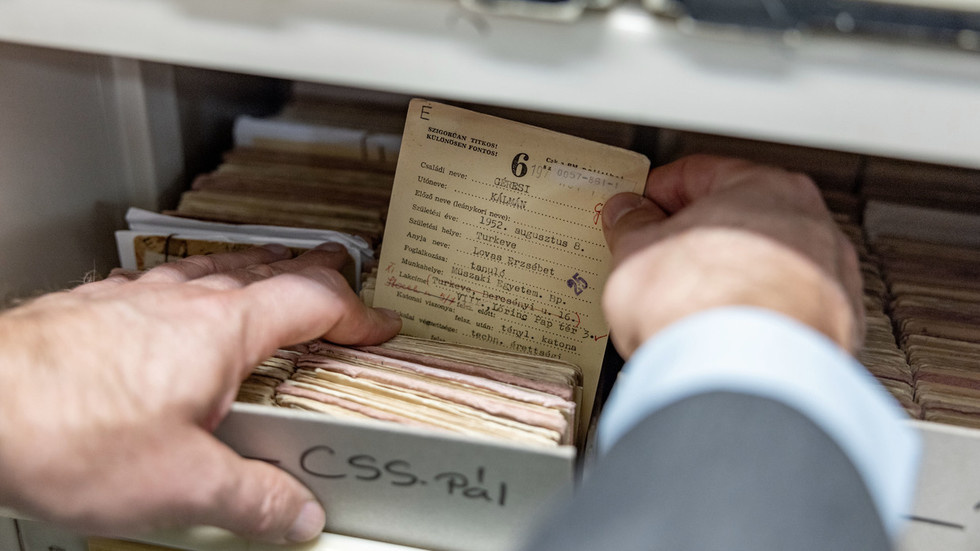
The release of Hungary's communist-era secret police records has triggered a wave of political accusations and public denials, leading to fears of a witch hunt. Prominent figures are now scrambling to defend their reputations against allegations of collaboration with the secret police. The archives reportedly contain the names of an estimated 50,000 to 60,000 individuals, raising significant concerns about potential public shaming and the reputational damage that may ensue from these revelations. Critics have warned that many of the files are incomplete or unreliable, emphasizing that merely appearing in the records does not necessarily imply collaboration with the secret police.
Former Prime Minister Viktor Orban has found himself embroiled in this controversy. Recently, Miklos Nemeth, Hungary's last communist-era premier, accused Orban of informing on fellow soldiers during his compulsory military service in the early 1980s. In response, Orban and his Fidesz party have dismissed these allegations, with Orban asserting that he refused an attempt to recruit him and was subsequently placed under surveillance. He has published declassified Interior Ministry documents that he claims support his account.
Other notable figures have also sought to clear their names amid the fallout. Singer Robert Szikora has denied ever reporting on anyone or signing a recruitment statement, while former Central Bank Governor Gyorgy Suranyi stated that his inclusion in the records reflects only an unsuccessful recruitment attempt in 1986. Retired Catholic Bishop Miklos Beer has similarly rejected allegations of collaboration after being identified under the code name 'Dunai Gabor', insisting that he never informed on anyone.
Errors in Security Records Uncovered
The controversy has already revealed errors within the records. Former Fidesz lawmaker Sandor Lezsak denied being an informer, prompting Hungary's Historical Archives of the State Security Services to acknowledge a mistake in his listing. The institution has since apologized, confirming that Lezsak was monitored rather than recruited.
Filed & Cleared
Prime Minister Peter Magyar, who pledged to open the archives, has urged the public to approach these revelations with caution. He warned that families could face painful discoveries about deceased relatives. "I ask everyone to treat this long overdue publication of documents with dignity and humanity," Magyar stated, adding that confronting historical trauma requires open discussion and inquiry.
The Hungarian Catholic Bishops' Conference has also cautioned against hasty judgments, noting that while some individuals may have collaborated willingly, others were coerced, blackmailed, or tortured into doing so. The archives, which became publicly searchable on Wednesday, cover surviving state security records from 1957 to 1962. Historians have cautioned that the documents are incomplete and that many individuals named were targets of surveillance or refused recruitment attempts, rather than being informers themselves.