Urban Artist SpY Unveils Surveillance Installation in Madrid
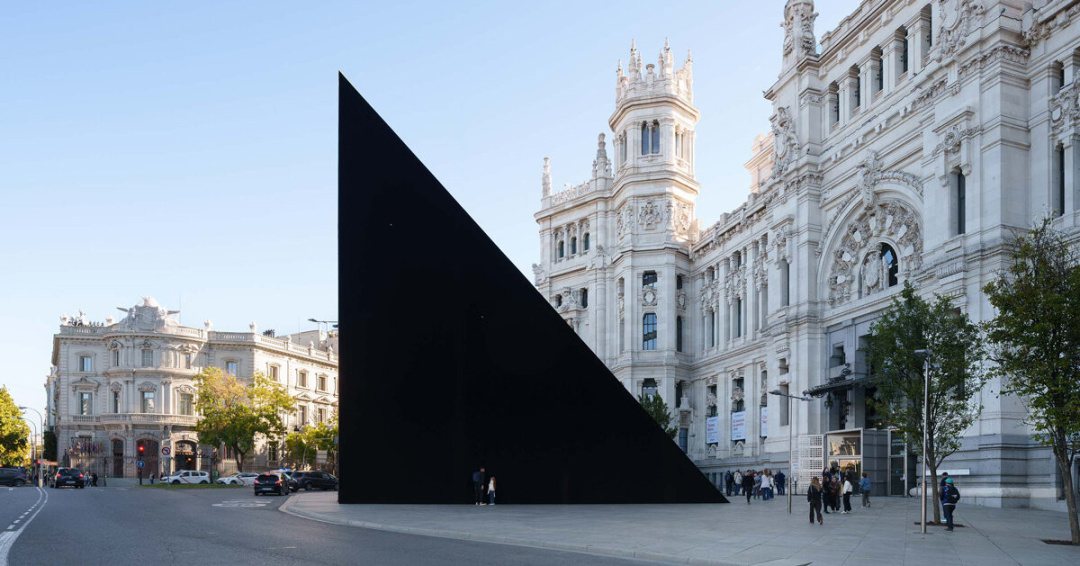
In the heart of Madrid's Plaza de Cibeles, directly in front of the Palacio de Cibeles, urban artist SpY has introduced a significant architectural installation known as PANOPTICON. This temporary structure, shaped like an equilateral black triangle measuring 20 meters on each side, creates a stark visual contrast against the historic backdrop of the Palacio, altering established sightlines across the civic square.
The installation operates through a dynamic interplay of obstruction and visibility. While the opaque triangular form physically blocks expansive views of the surrounding urban landscape, it features discreet viewing apertures along its edges. These apertures invite visitors to peer inside, where they can access display monitors connected to closed-circuit television (CCTV) cameras positioned at the apex of the structure. This setup allows for the projection of fragmented live footage of the plaza, capturing the movements of pedestrians, traffic, and nearby architecture from elevated perspectives.
By encouraging observers to look through these surveillance feeds, PANOPTICON engages with the philosophical ideas of Jeremy Bentham's panopticon model. It prompts a reflection on how digital tracking systems and public surveillance influence movement and privacy in modern urban environments. The installation serves as a commentary on the pervasive nature of surveillance in contemporary society, questioning the balance between public safety and individual privacy.
Exploring Interaction and Reflection on Surveillance
The installation is not only a visual spectacle but also a thought-provoking exploration of the implications of surveillance in public spaces. As visitors interact with the installation, they are invited to consider their own roles within the framework of observation and privacy in the urban context.
Filed & Cleared
Through its innovative design and interactive elements, PANOPTICON aims to foster dialogue about the implications of surveillance in everyday life. By situating itself in a prominent public square, the installation encourages a wide audience to engage with its themes, making the conversation about privacy and observation accessible to all.
As the installation continues to draw attention, it highlights the ongoing relevance of discussions surrounding surveillance technology and its impact on society. SpY's work not only beautifies the urban landscape but also serves as a catalyst for critical reflection on the nature of public space and the unseen forces that govern it.